

Start with a specific question
Search an artist, title, medium or subject. Try name variants and a broader date range when results are empty. One catalogue may cover several buildings: check each record’s location.
Art guide
Official catalogues for finding artworks, comparing media and continuing a visit.
Search an artist, title, medium or subject. Try name variants and a broader date range when results are empty. One catalogue may cover several buildings: check each record’s location.
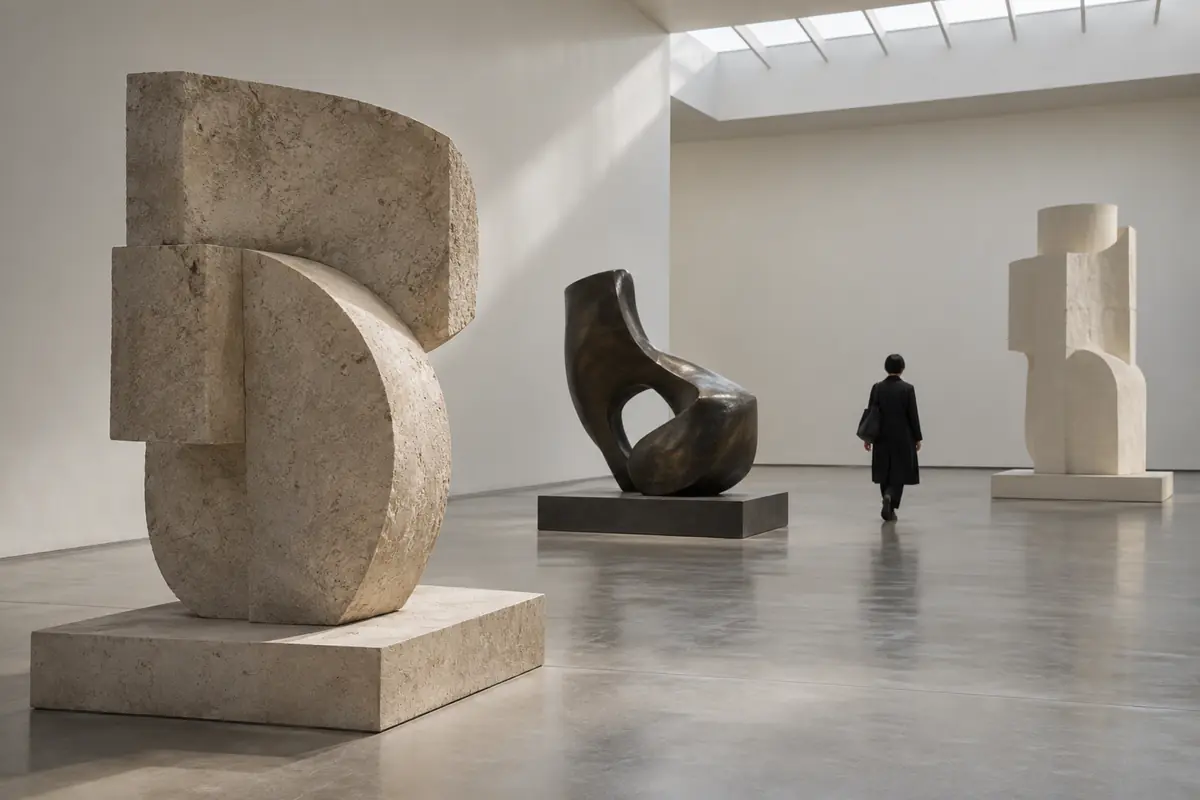
Record the date, material, dimensions, accession number and attribution. “Workshop of”, “attributed to” and “after” mean different relationships to an artist. Keep approximate dates and cautious attributions in your notes.
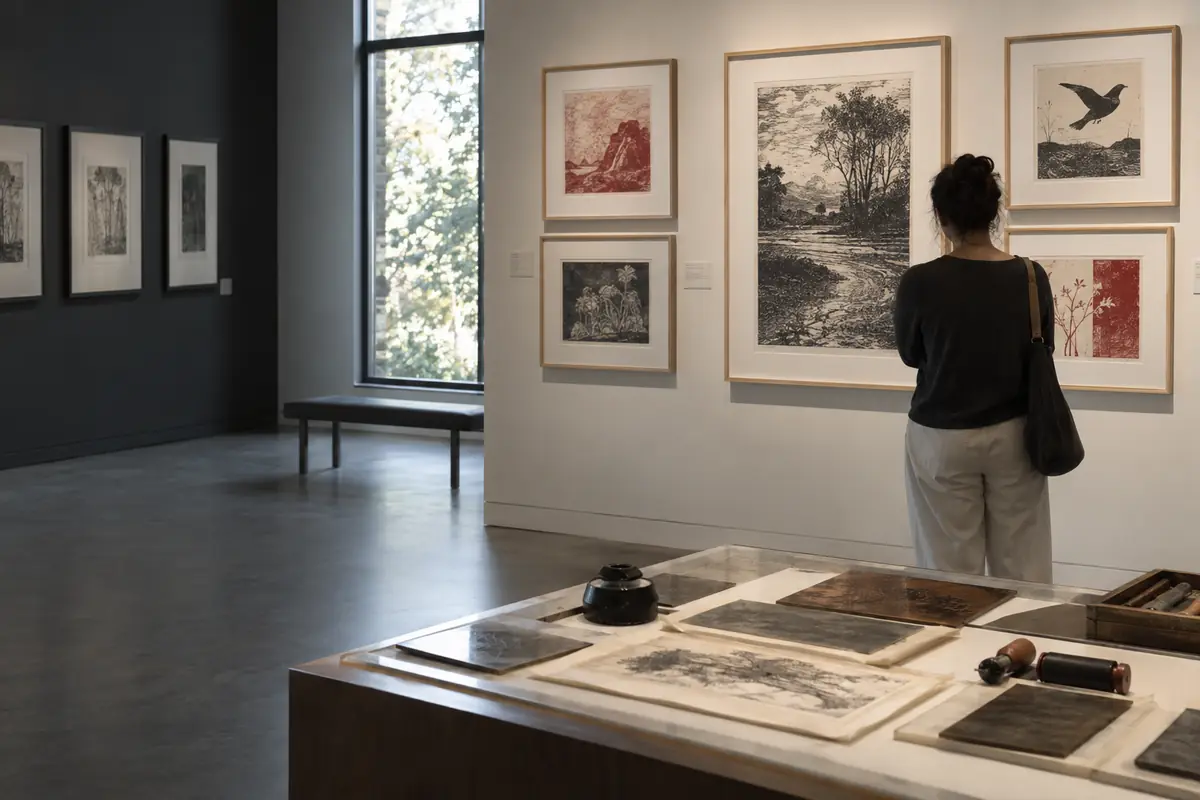
Compare two works with a shared subject through format, support, composition and context. Screen size is not actual size. Colours vary with photography and your screen; a digital image cannot reproduce surface or the experience of space.
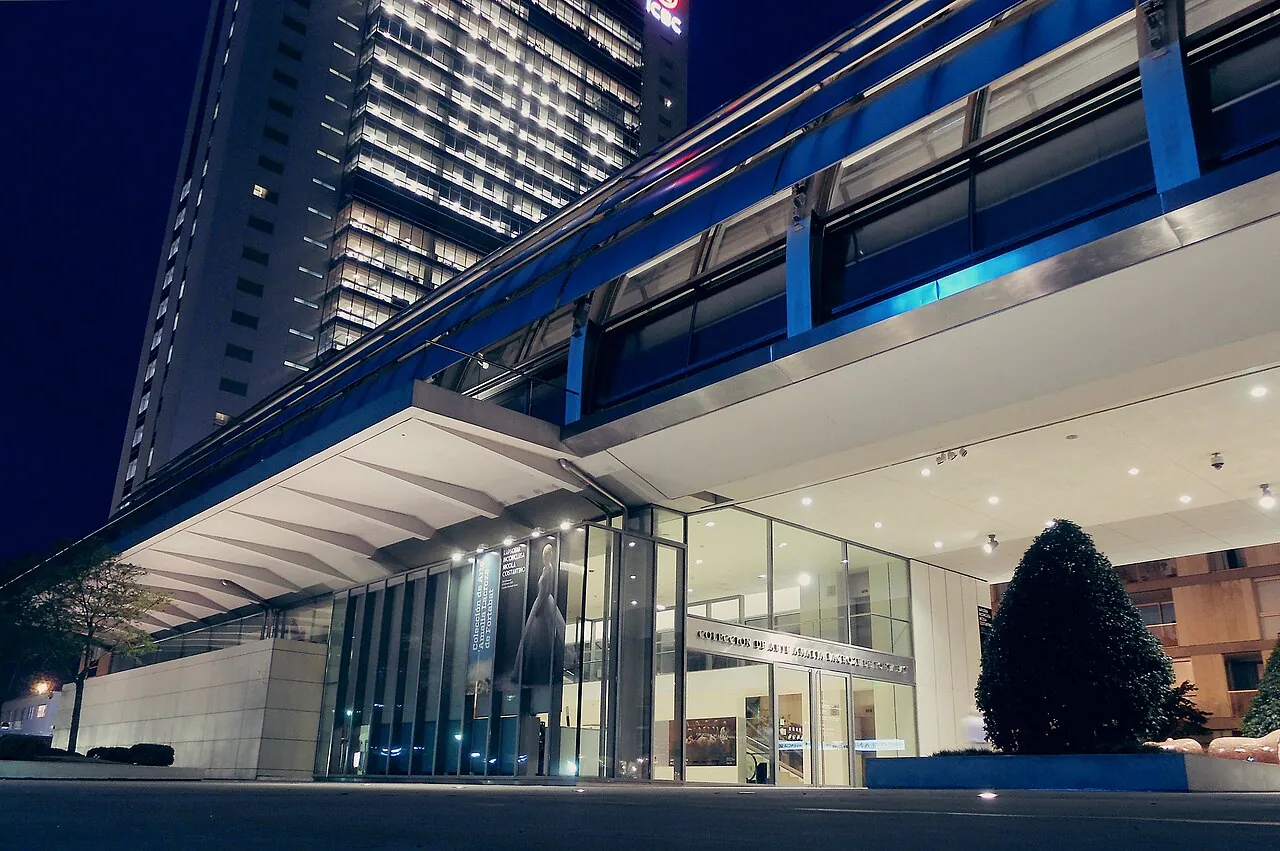
Keep the record URL, institution and accession number. Before reusing an image, read its rights statement and the catalogue terms. Being able to view or download an image does not imply unconditional permission to republish it.
These features were identified in official resources. Start with a specific question, then save the object record’s link.
| Starting point | Documented search criteria or features | View source |
|---|---|---|
| Musée du Louvre | Artist, date, location, category, ARK link | View source — Musée du Louvre ↗ |
| Museum of Modern Art (MoMA) | Artist, work type, on-view filter | View source — Museum of Modern Art (MoMA) ↗ |
| The Metropolitan Museum of Art | Artist, title, date, object number | View source — The Metropolitan Museum of Art ↗ |
| Rijksmuseum | Artworks, personal visitor selections | View source — Rijksmuseum ↗ |
An online record does not guarantee that a work is on display. A personal selection is not a scholarly attribution or museum display. Check each image’s rights before reuse.
Data retrieved .
No. Records may describe works in storage, on loan or at another site. Check exhibition status separately where available.
Use the accession number from the label, or search the artist’s name and a word from the title in the official catalogue.
Editorial advice. Visit conditions and image rights depend on each institution; consult its official information.
Collection
Compare dates, materials and dimensions, then examine the reproductions below. Measurements may describe an image, a sheet or an object: read the record before comparing scale.
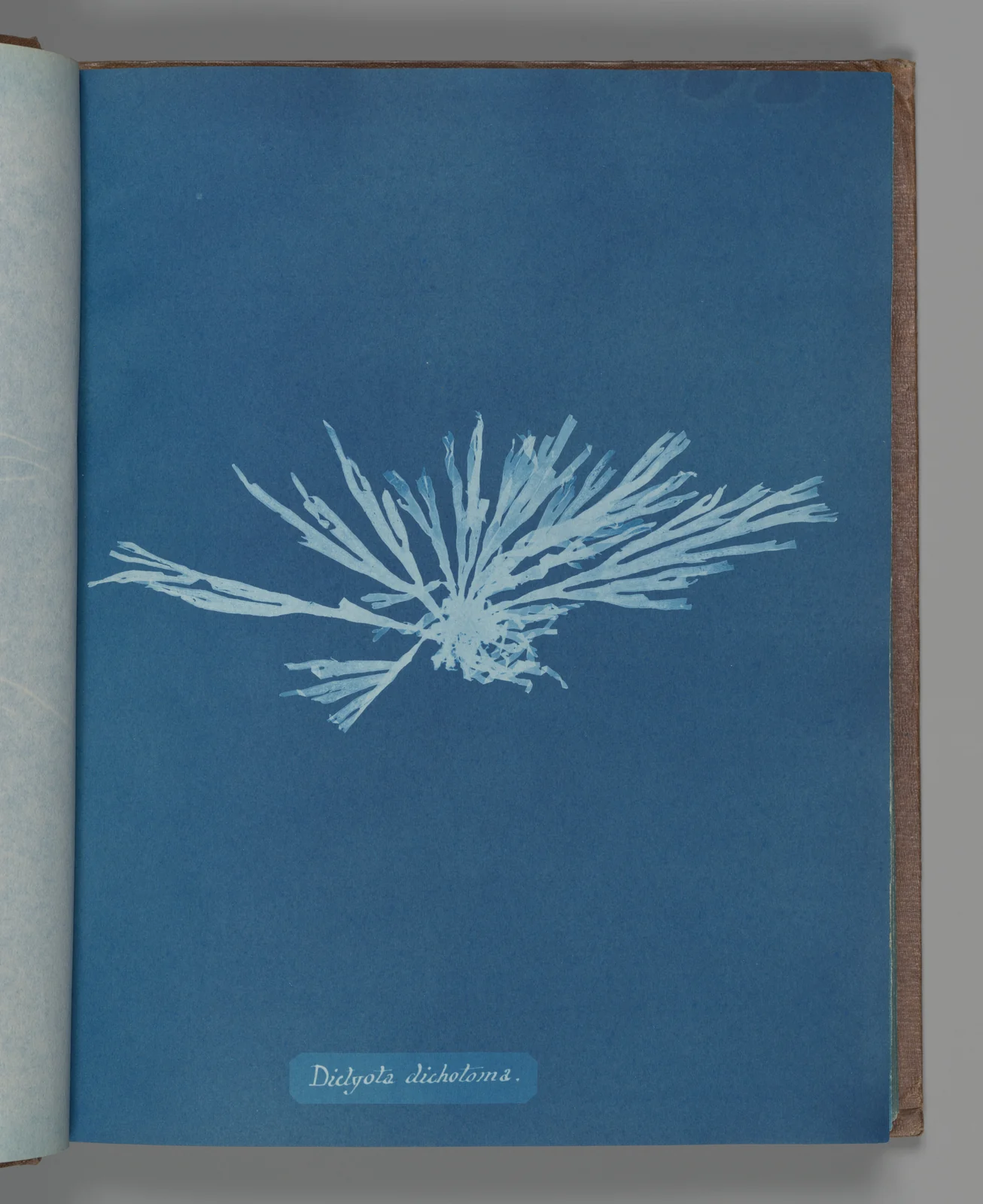
| Reference point | Wheat Field with Cypresses | Dictyota dichotoma |
|---|---|---|
| Date | 1889 | About 1853 |
| Medium and origin | Oil on canvas | Cyanotype |
| Dimensions | 73.2 × 93.4 cm | 25.3 × 20 cm |
| Inventory number | 1993.132 | 2005.100.557 (18) |
| Collection | The Metropolitan Museum of Art | The Metropolitan Museum of Art |
| Museum record | Museum record — Wheat Field with Cypresses ↗ | Museum record — Dictyota dichotoma ↗ |
Collection
Specific objects connect techniques, history and collections. These records do not guarantee that works are currently on display.
20 — examples shown
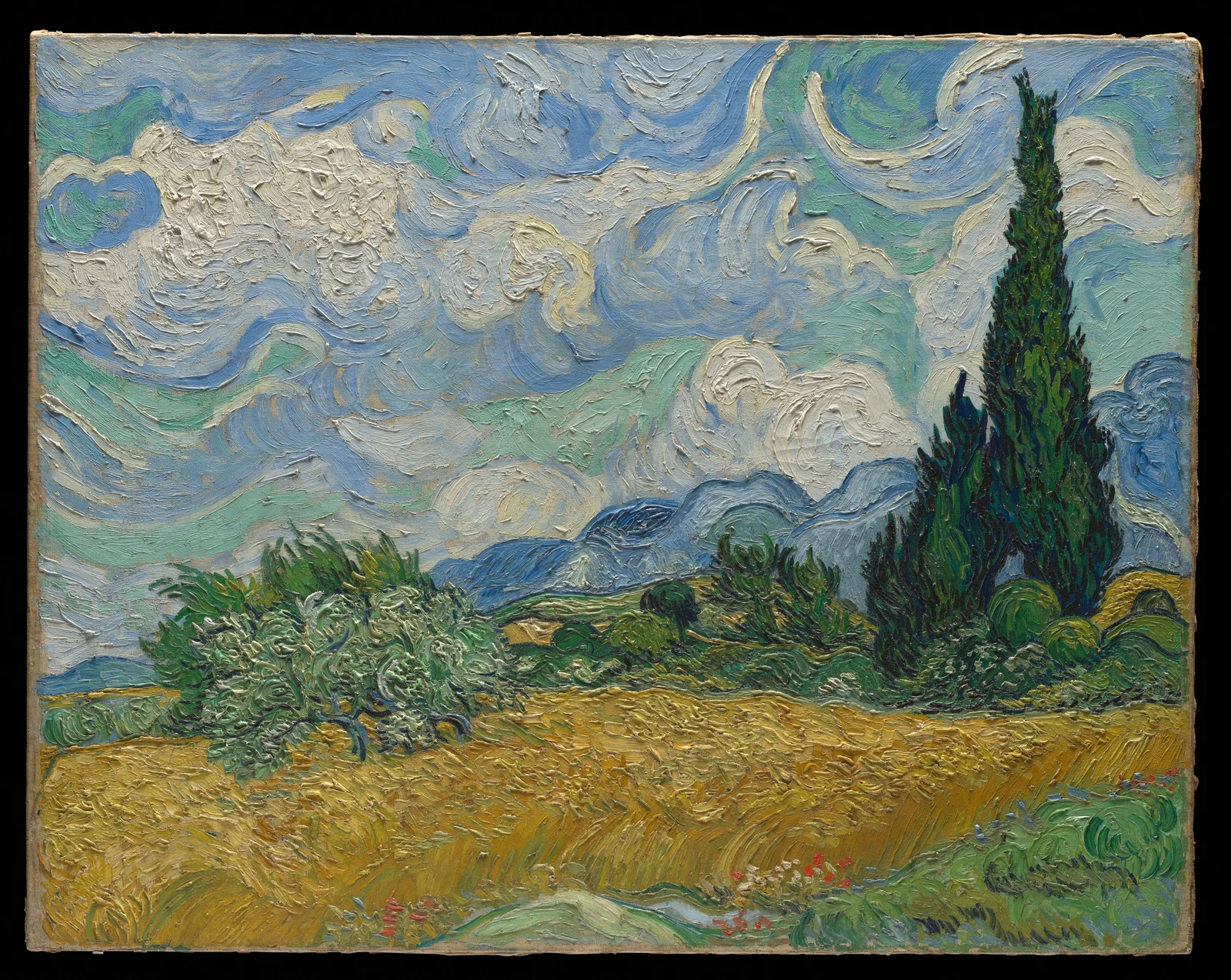
Vincent van Gogh
The vertical cypress contrasts with bands of wheat and curves in the sky. Follow the direction of the brushstrokes: they describe forms while animating the painted surface. Compare the tree’s dark silhouette with the neighbouring blues and yellows.
Museum record ↗ — Wheat Field with Cypresses
Explore the museum — The Metropolitan Museum of Art →
Data consulted on .
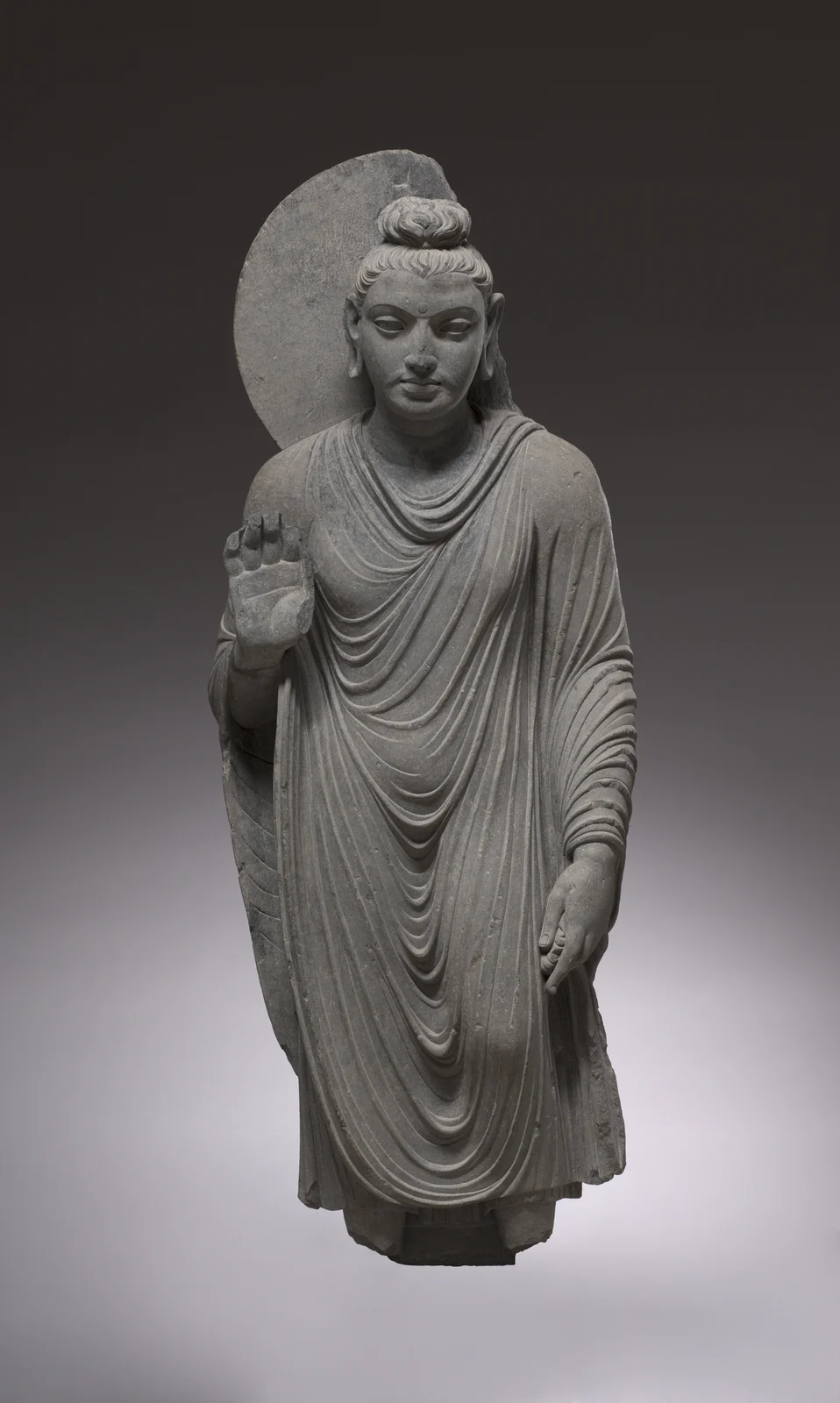
The garment’s closely spaced folds contrast with the calm face. Follow the sculpture from halo to drapery, distinguishing surviving relief and missing parts. This Gandharan work offers a counterpoint to the bronze Nataraja: material, posture and religious context differ.
Museum record ↗ — Standing Buddha
Explore the museum — Cleveland Museum of Art →
Data consulted on .
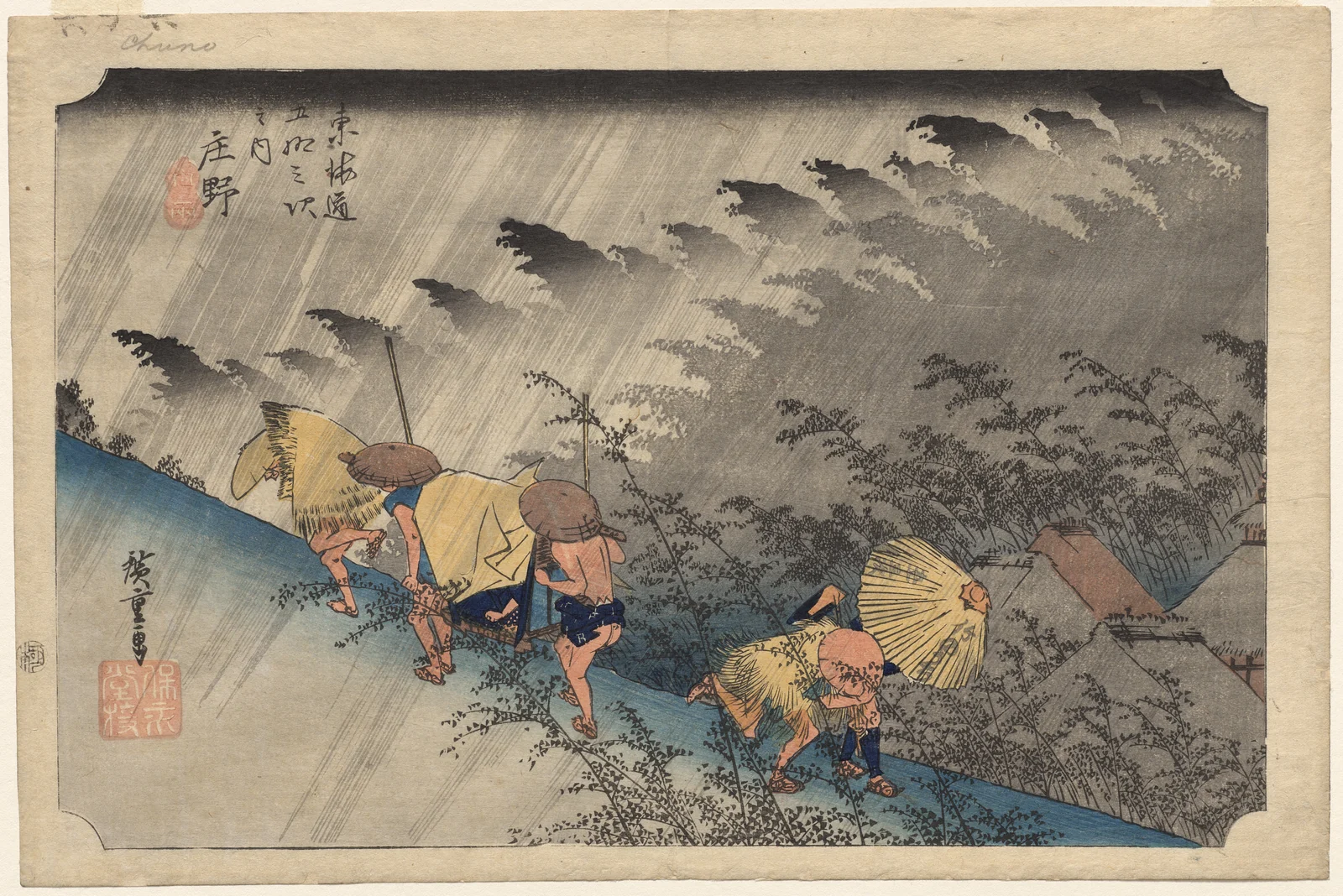
Utagawa Hiroshige
Rain’s diagonals give travellers and landscape a shared direction. The museum identifies three blocks for three grey shades in the distant bamboo. Compare these planes with foreground black lines to understand how a printed image builds atmosphere.
Museum record ↗ — Driving Rain at Shono, from Fifty-Three Stations of the Tokaido
Explore the museum — Cleveland Museum of Art →
Data consulted on .
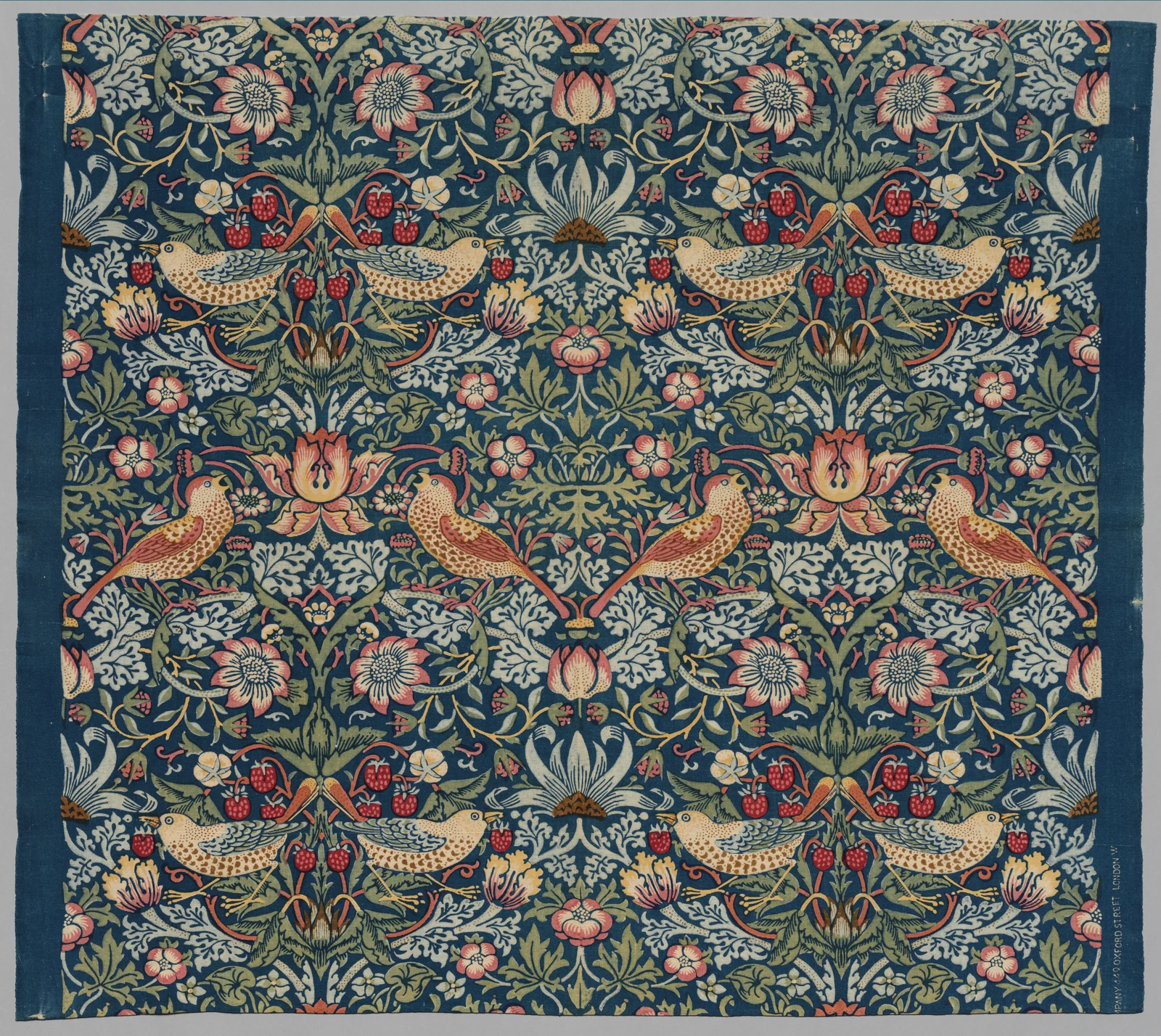
William Morris
Birds, strawberries and stems form a repeat that continues beyond the fragment’s edge. William Morris is identified as designer; the museum dates the surviving cloth to about 1936. Distinguish pattern design, manufacture of this example and entry into the collection.
Museum record ↗ — Strawberry Thief
Explore the museum — Cleveland Museum of Art →
Data consulted on .
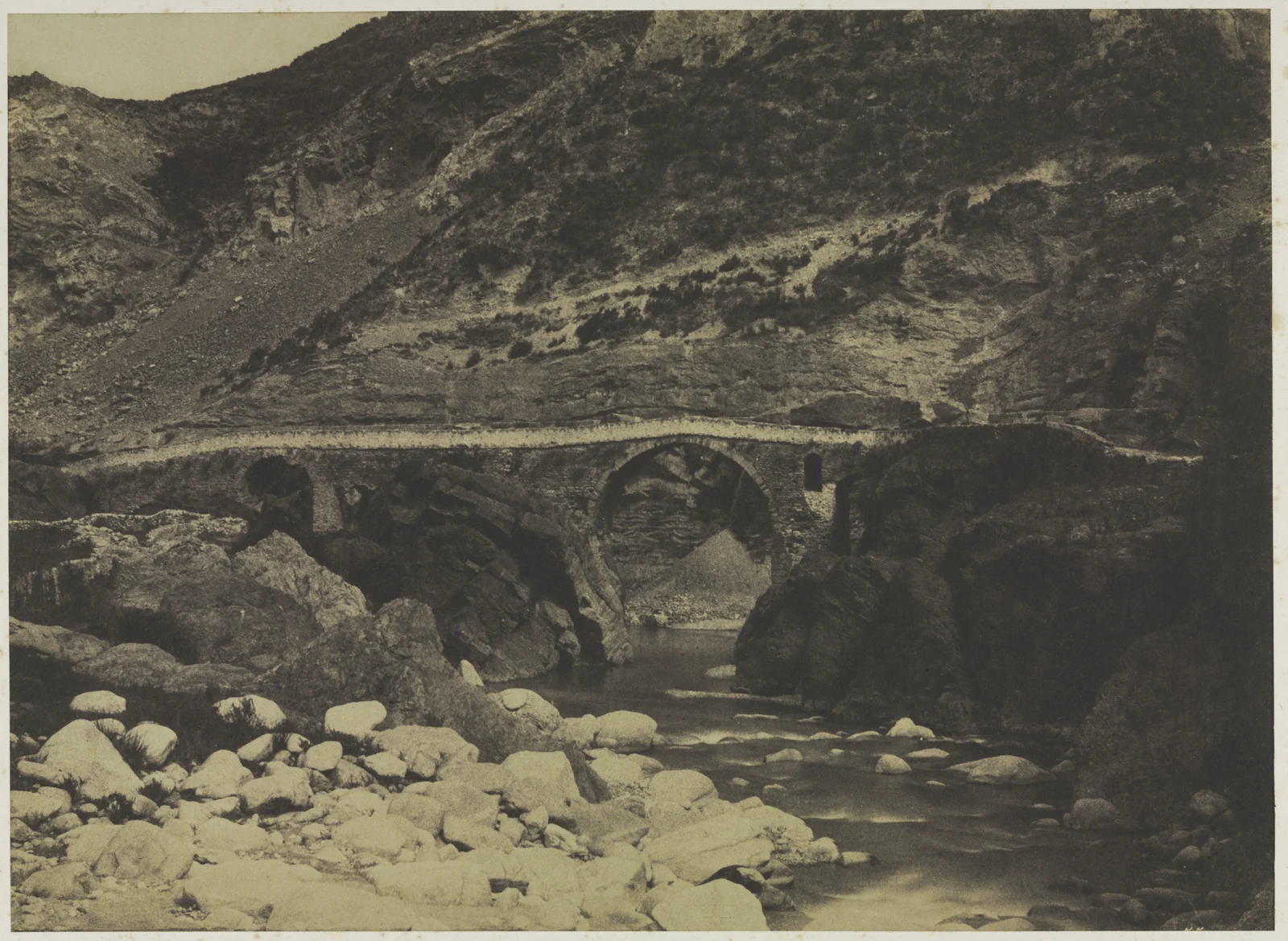
Gustave Le Gray
The bridge remains a small line within rocks, water and slopes. Compare this arrangement with an architectural record centred on the structure. The process combines a waxed-paper negative and a salted-paper print; the stated dimensions refer to the image.
Museum record ↗ — The Bridge of Palalda
Explore the museum — Cleveland Museum of Art →
Data consulted on .
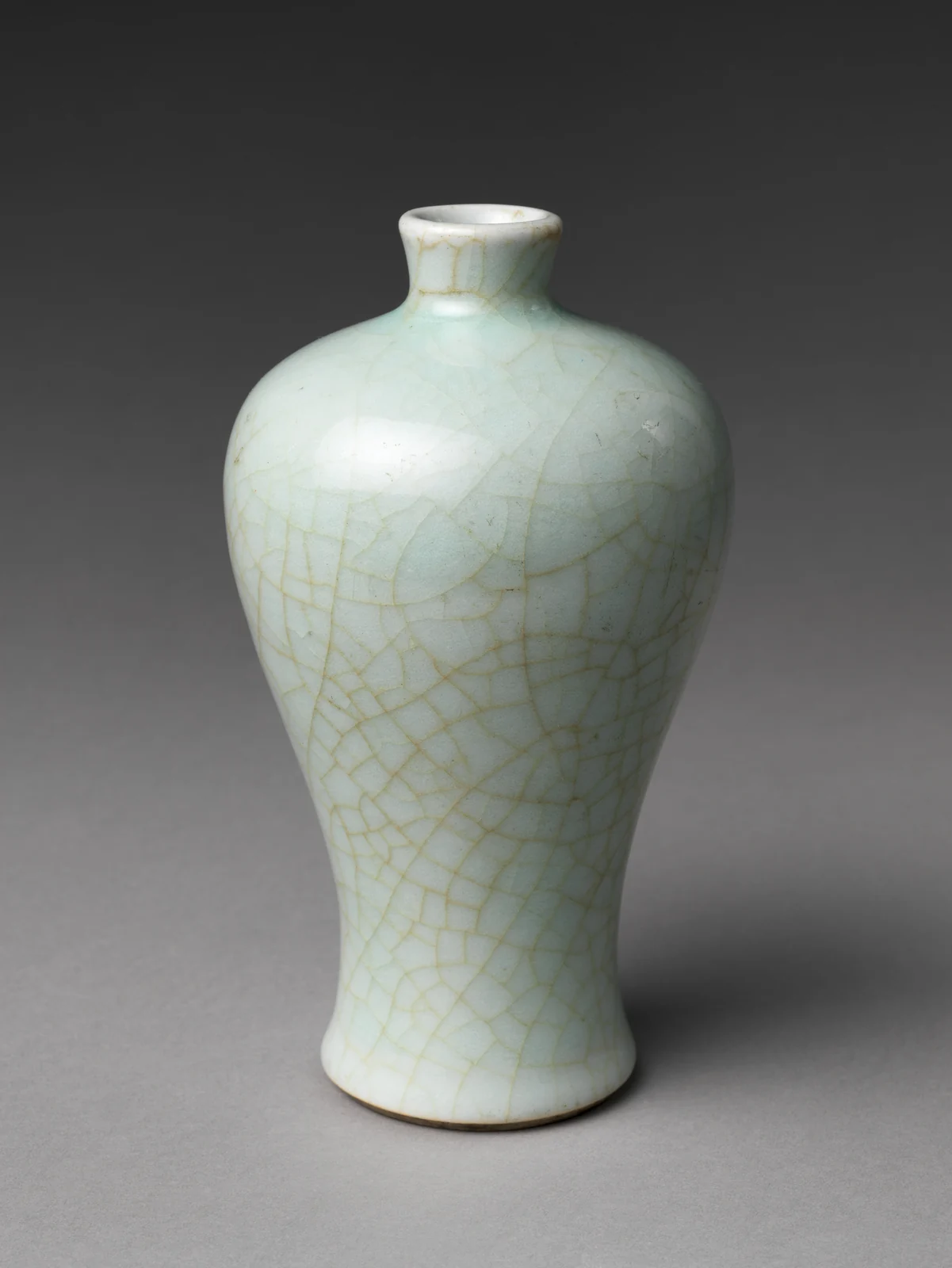
The record distinguishes meiping shape, porcelain body and celadon glaze. Observe the glaze crackles and the transition from broad shoulder to narrow neck. The measurements give height and diameter: this small vase should not be imagined at the scale of a monumental jar.
Museum record ↗ — Vase in Meiping Shape
Explore the museum — The Metropolitan Museum of Art →
Data consulted on .
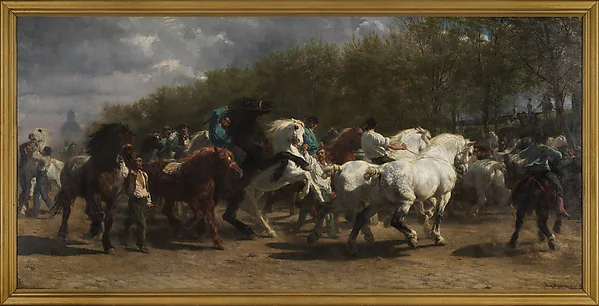
Rosa Bonheur
The painting depicts the horse market on Paris’s Boulevard de l’Hôpital. Over five metres wide, it is greatly reduced in reproduction. Follow the bodies’ directions and the gaps between horses to examine how an observed scene becomes a composition. The Met distinguishes its 1853 Salon appearance from the retouching in 1855.
Museum record ↗ — The Horse Fair
Explore the museum — The Metropolitan Museum of Art →
Data consulted on .
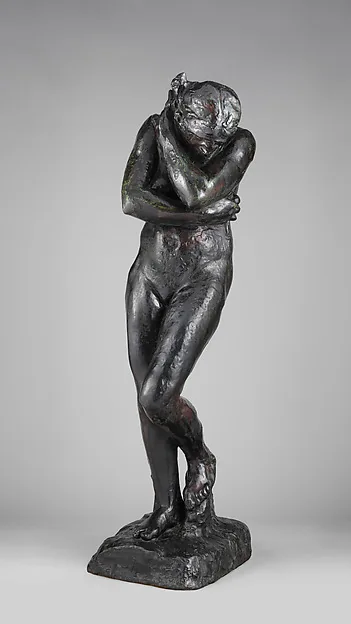
Auguste Rodin
The model dates to 1881, but this bronze was cast in 1910: the dates describe different stages. The Met commissioned the cast from a plaster model in Rodin’s studio. Observe the folded arms and twisting body; a frontal photograph does not reveal every relationship between the volumes.
Explore the museum — The Metropolitan Museum of Art →
Data consulted on .
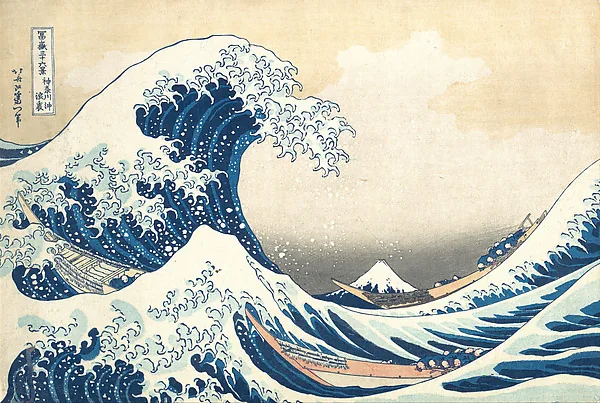
Katsushika Hokusai
This impression belongs to Thirty-six Views of Mount Fuji. JP1847 identifies the Met’s sheet, rather than every impression of the design. Compare the wave, the boats and the small triangle of Mount Fuji: their relative scales organise depth. The technique is woodblock printing, rather than painting.
Museum record ↗ — The Great Wave off Kanagawa
Explore the museum — The Metropolitan Museum of Art →
Data consulted on .
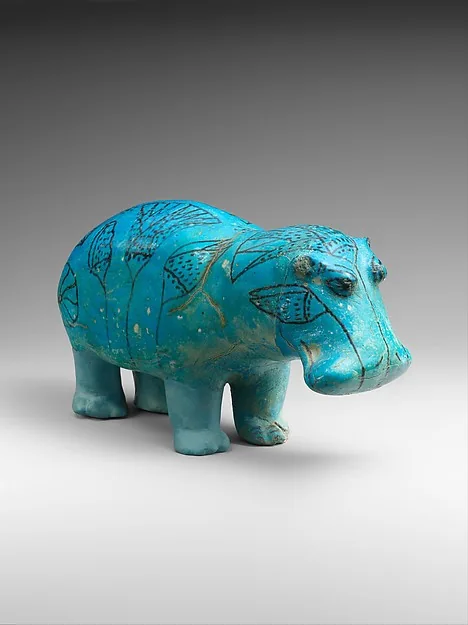
The figurine’s Egyptian faience is a ceramic material based on ground quartz, distinct from clay-based earthenware. Painted lotuses evoke the animal’s river habitat. The record connects the object to Senbi’s burial equipment at Meir and identifies three restored legs: material, find context and conservation history are separate questions.
Museum record ↗ — Hippopotamus, known as William
Explore the museum — The Metropolitan Museum of Art →
Data consulted on .
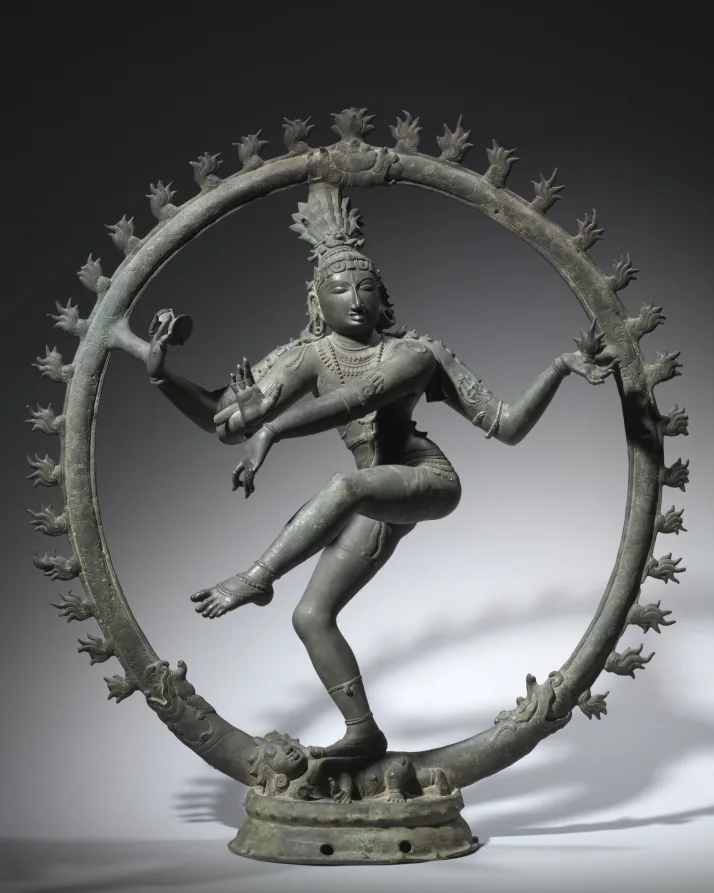
The record places this bronze in Chola-period Tamil Nadu. It links the drum to passing time, fire to destruction and the trampled figure to ignorance. Describe the arms, supports and circle first, then compare your observation with this documented interpretation: recognising a motif does not by itself explain its meaning.
Museum record ↗ — Nataraja, Shiva as the Lord of Dance
Explore the museum — Cleveland Museum of Art →
Data consulted on .
Anna Atkins
Anna Atkins renders branching seaweed as a light shape against blue. This cyanotype exemplifies contact photography: the silhouette depends on the specimen’s arrangement on sensitised paper. Compare sharp outlines with softer areas, distinguishing the plant, its image and the surviving sheet. The Met records the dimensions of the image.
Museum record ↗ — Dictyota dichotoma
Explore the museum — The Metropolitan Museum of Art →
Data consulted on .
Wari
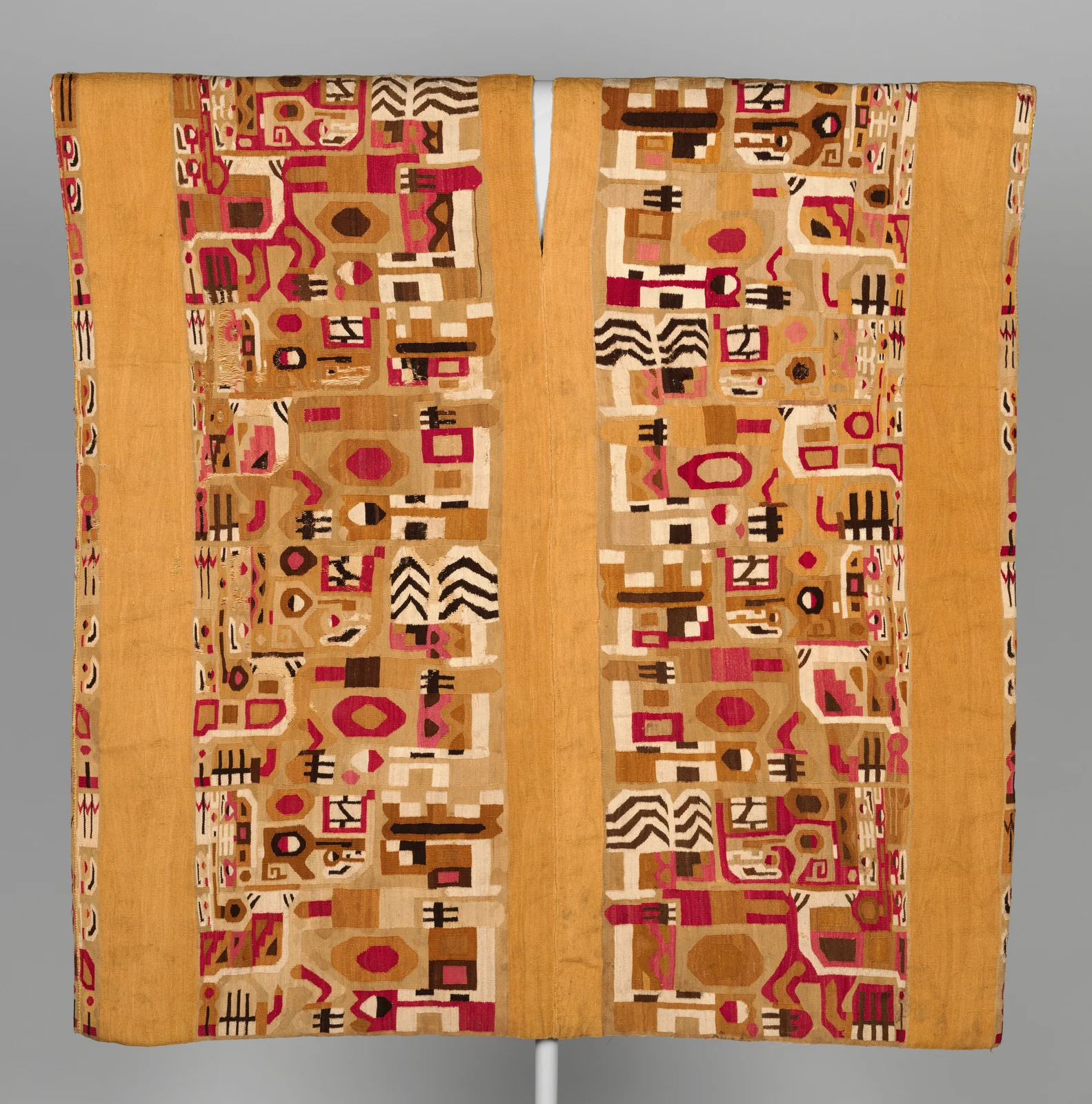
Two woven panels are sewn together, leaving a head opening. Motifs repeat, compress and stretch within vertical bands: track the same shape between two registers. Consider this Andean garment as a volume worn on a body as well as a flat surface. The catalogue dimensions are approximate.
Explore the museum — The Metropolitan Museum of Art →
Data consulted on .
Yombe-Kongo · nganga
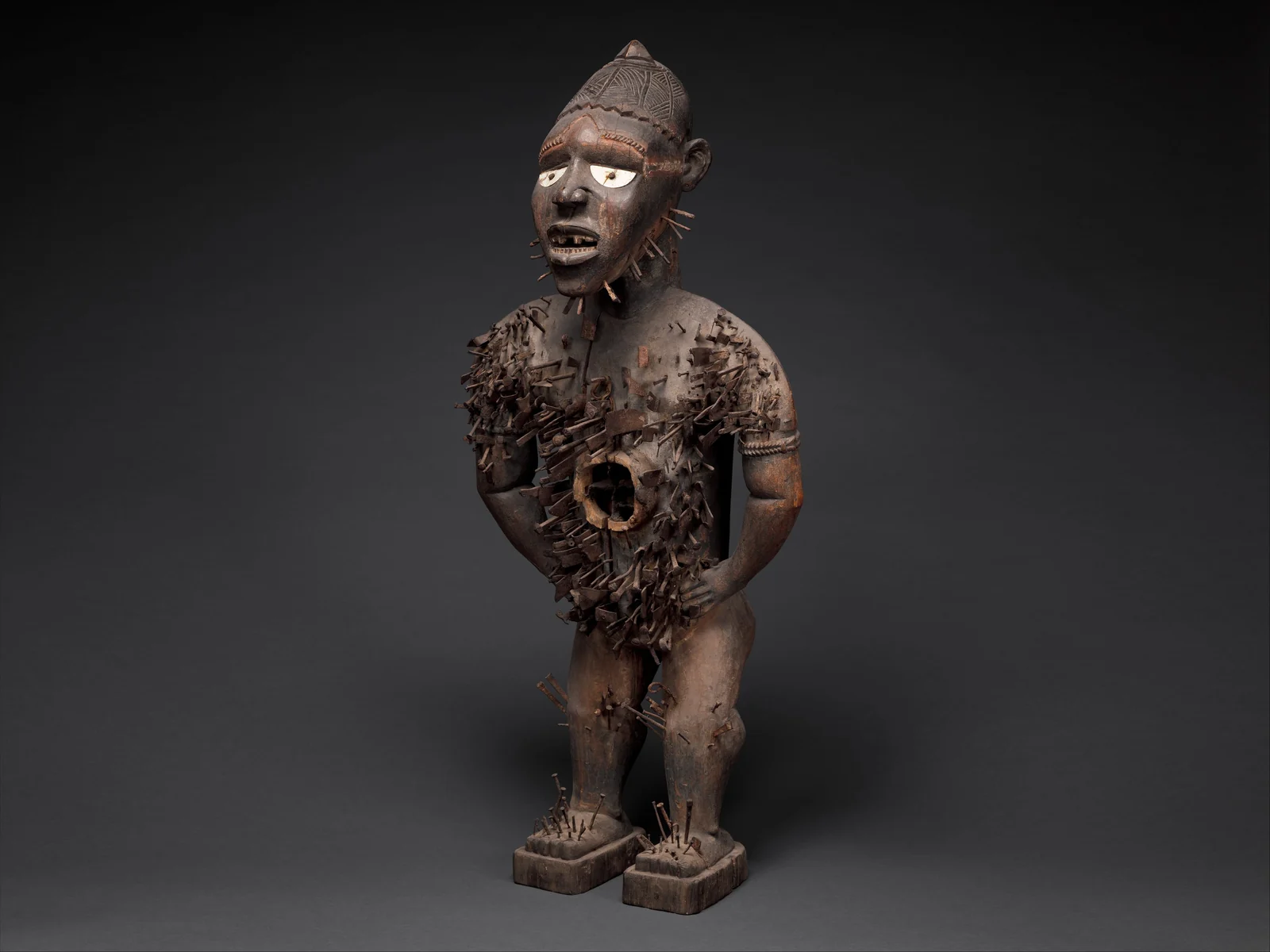
The Met attributes this work to collaboration between a Yombe-Kongo artist and a nganga, a ritual specialist. Metal elements relate to pledges and settling community disputes. Examine the posture and added materials without treating the figure as decoration alone. The record locates its origin in the Republic of the Congo or Cabinda, Angola.
Museum record ↗ — Mangaaka power figure (Nkisi N’Kondi)
Explore the museum — The Metropolitan Museum of Art →
Data consulted on .
Joseph Mallord William Turner
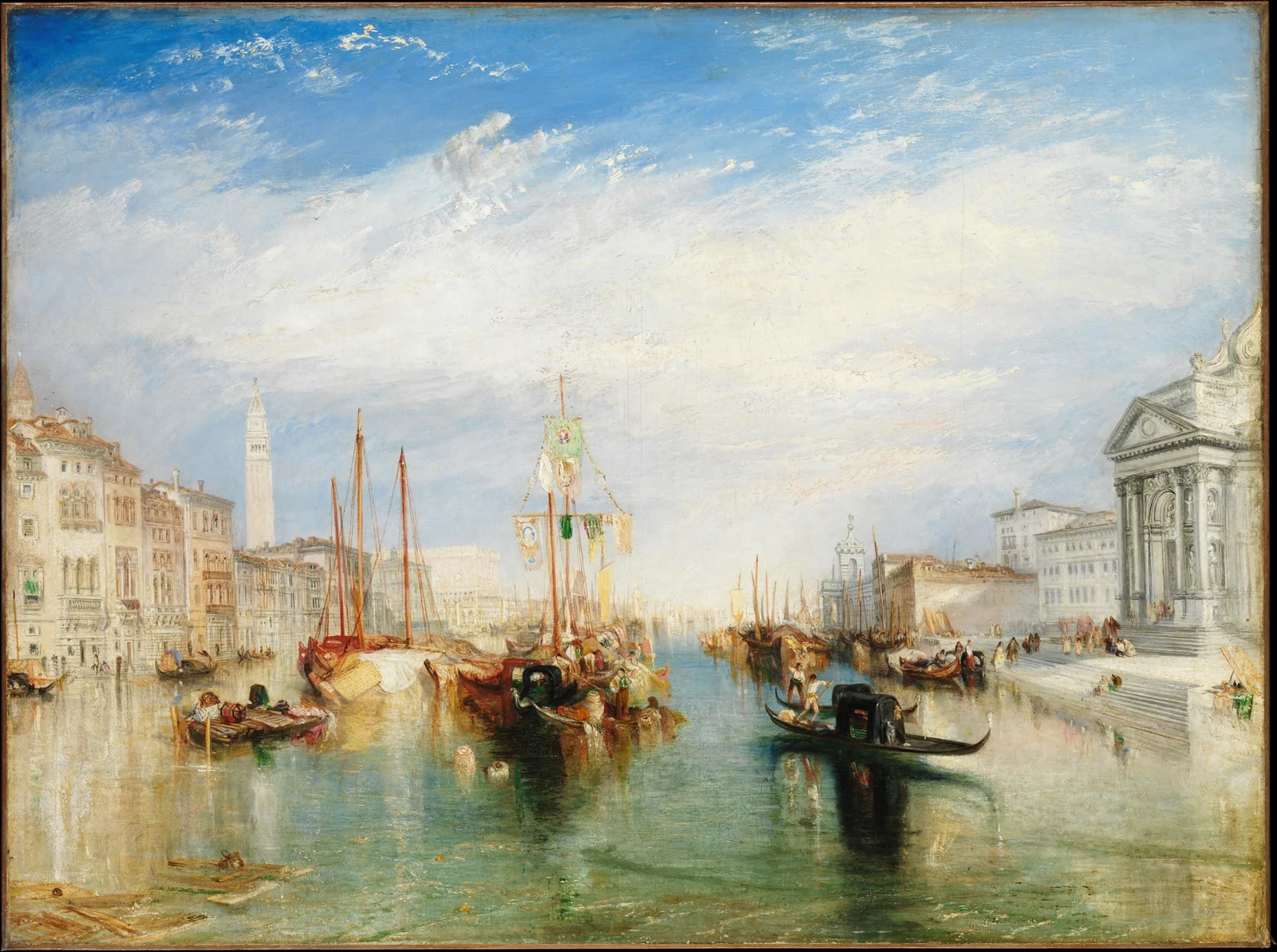
Turner builds the view around luminous water, boats and architecture that grows lighter in the distance. Compare foreground details with the softer shapes beyond. Depth emerges through tonal values and reflections as well as perspective lines.
Museum record ↗ — Venice, from the Porch of Madonna della Salute
Explore the museum — The Metropolitan Museum of Art →
Data consulted on .
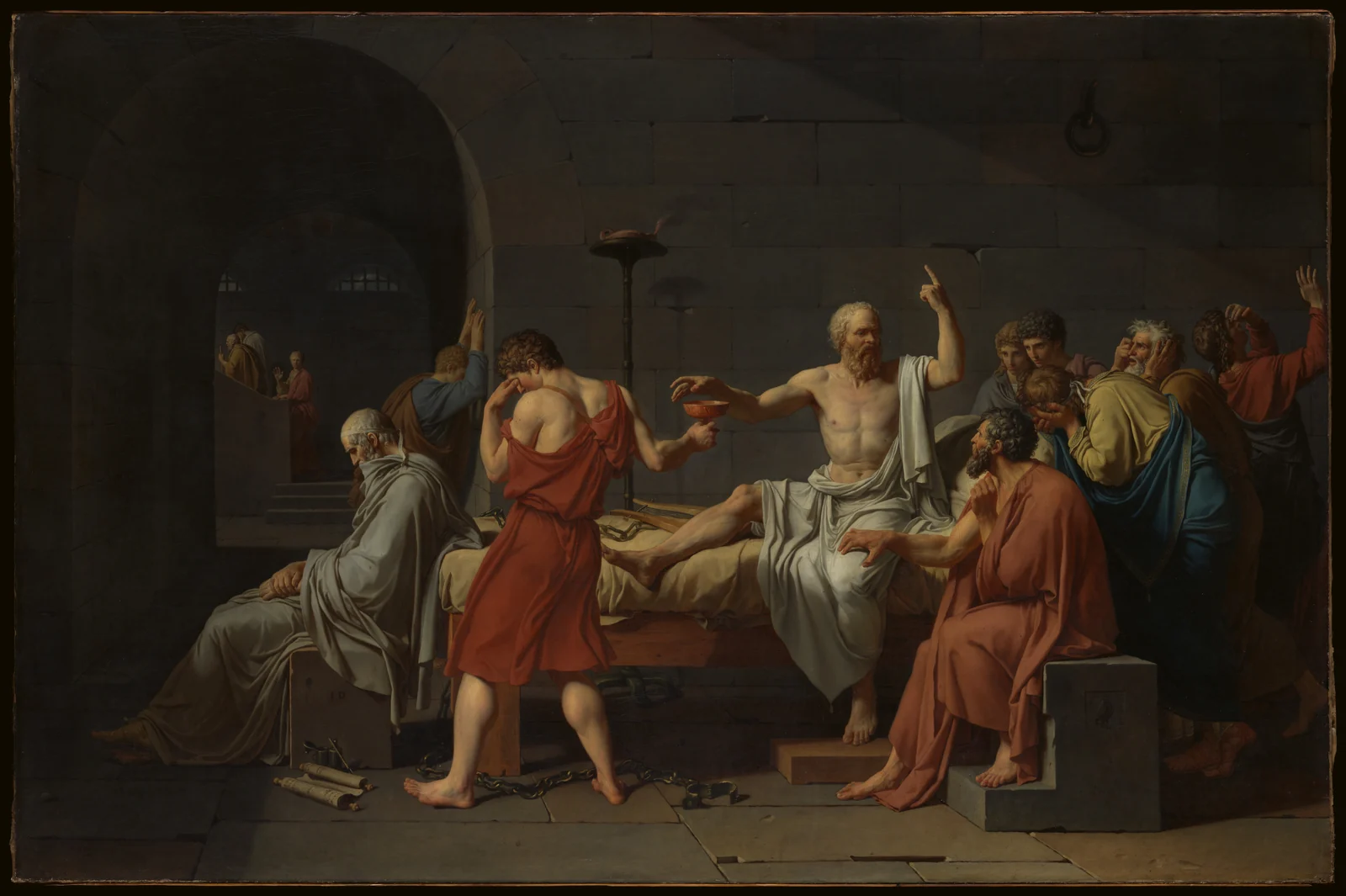
Jacques Louis David
The cup and raised hand organise a network of gestures around Socrates. Observe the figures’ reactions before interpreting the ancient story. The date 1787 refers to the making of the painting, not the depicted event: a label distinguishes subject from object.
Museum record ↗ — The Death of Socrates
Explore the museum — The Metropolitan Museum of Art →
Data consulted on .
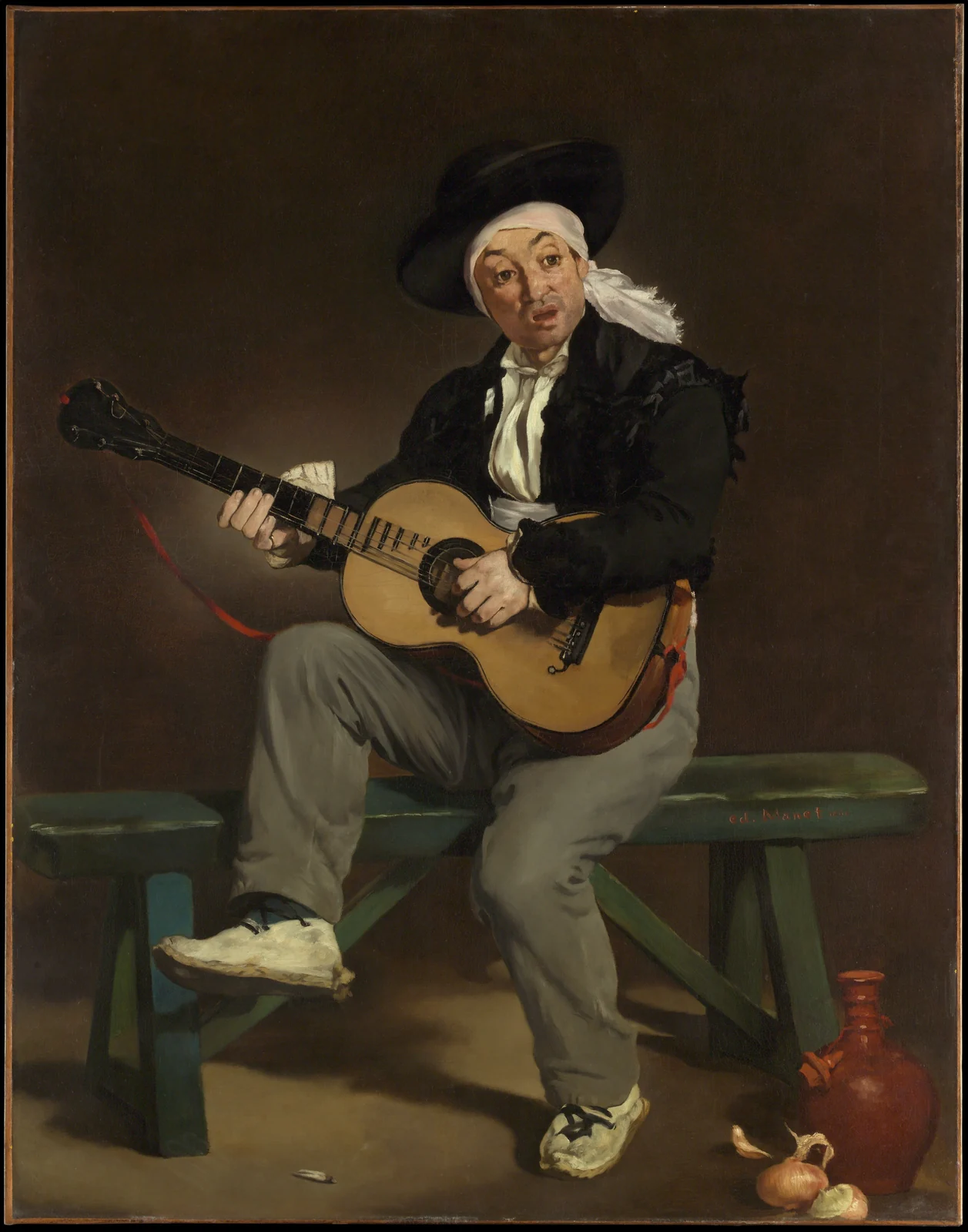
Édouard Manet
Against the dark background, the white shirt and grey trousers structure the musician’s figure. Compare the contours of the face, guitar and shoes: their definition varies. Also observe the space around the sitter and the objects on the floor.
Museum record ↗ — The Spanish Singer
Explore the museum — The Metropolitan Museum of Art →
Data consulted on .
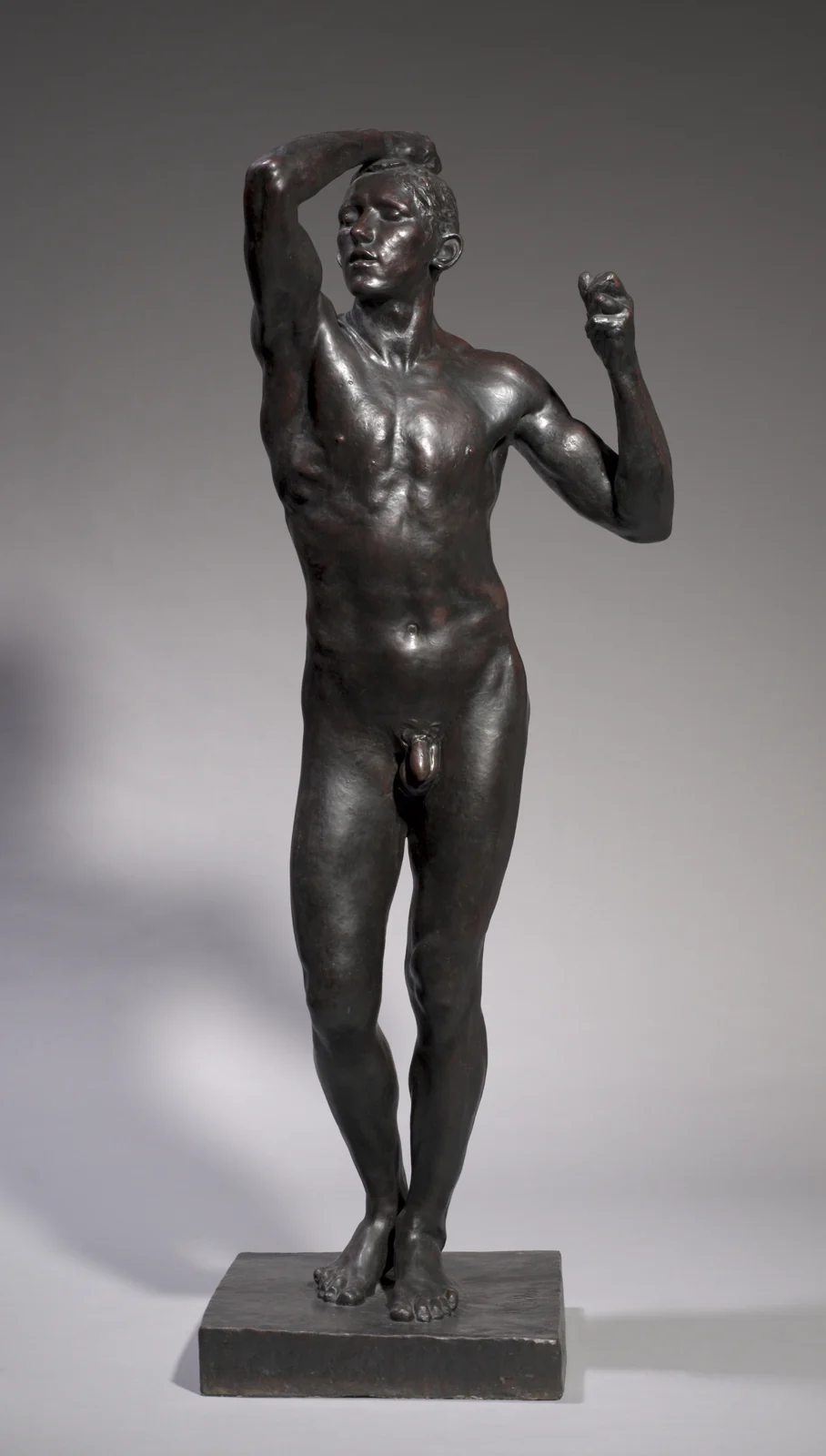
Auguste Rodin
The nearly life-size body invites comparison of balance, twist and raised arms. The museum dates this cast’s commission to 1916: a model’s date does not date every bronze. Measurements include the base, while the patina also affects how relief catches the eye.
Museum record ↗ — The Age of Bronze
Explore the museum — Cleveland Museum of Art →
Data consulted on .
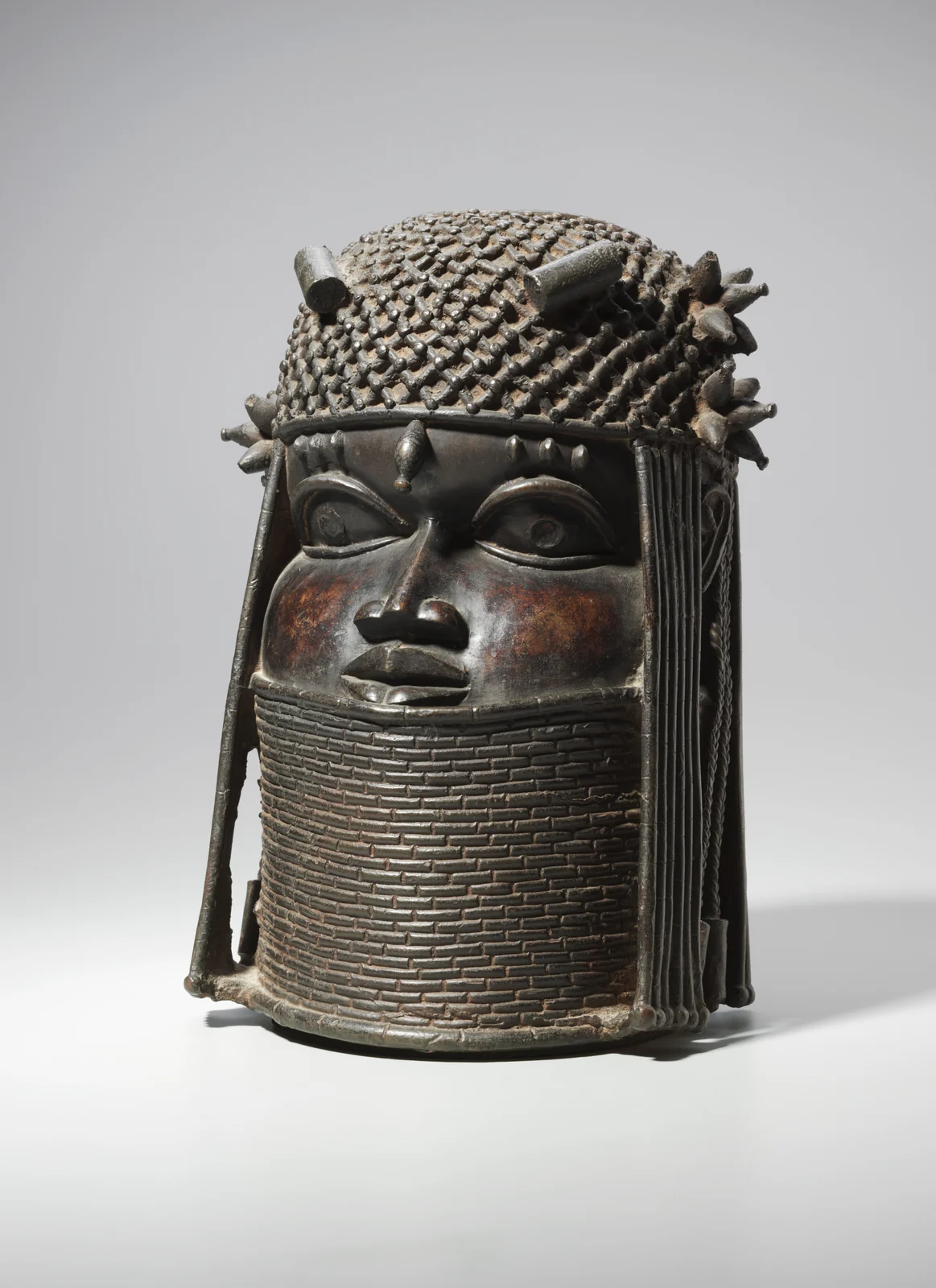
Beaded collars and a cap frame an idealised face; the head once supported a tusk on an ancestral altar. Published provenance records its transfer to Europe after the Siege of Benin in 1897. Read this history alongside the object’s form and religious purpose.
Museum record ↗ — Ancestral Commemorative Head, uhunmwun-elao
Explore the museum — Cleveland Museum of Art →
Data consulted on .
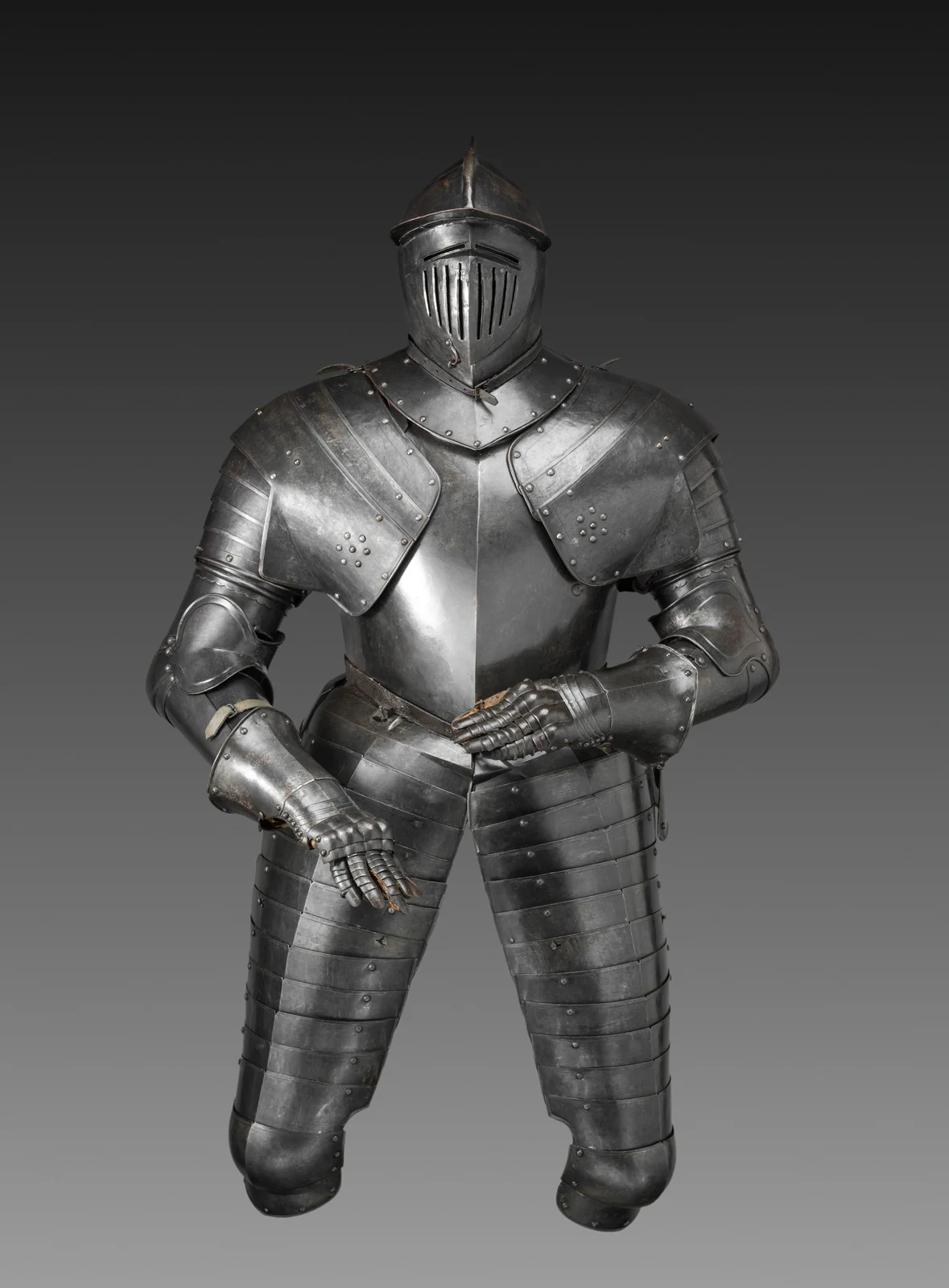
Articulated plates protect the body while allowing some movement. Find the shoulder, elbow and waist joins; the leg armour stops before the rider’s boots. The museum describes steel that was originally blued and is now black: surviving appearance need not equal original appearance.
Museum record ↗ — Cuirassier’s Armor
Explore the museum — Cleveland Museum of Art →
Data consulted on .
No example matches this selection.
Open Access reproduction · CC0. Resized and converted to WebP, without cropping. Translated title; the museum record retains the reference title.