Techniques
Oil, tempera, watercolor, acrylic and fresco each impose their own pace, transparency and material character.
Discipline
From fresco to abstraction, painting turns a surface into a space for perception.
Oil, tempera, watercolor, acrylic and fresco each impose their own pace, transparency and material character.
Portrait, landscape, still life, history painting and abstraction form traditions that overlap and renew themselves.
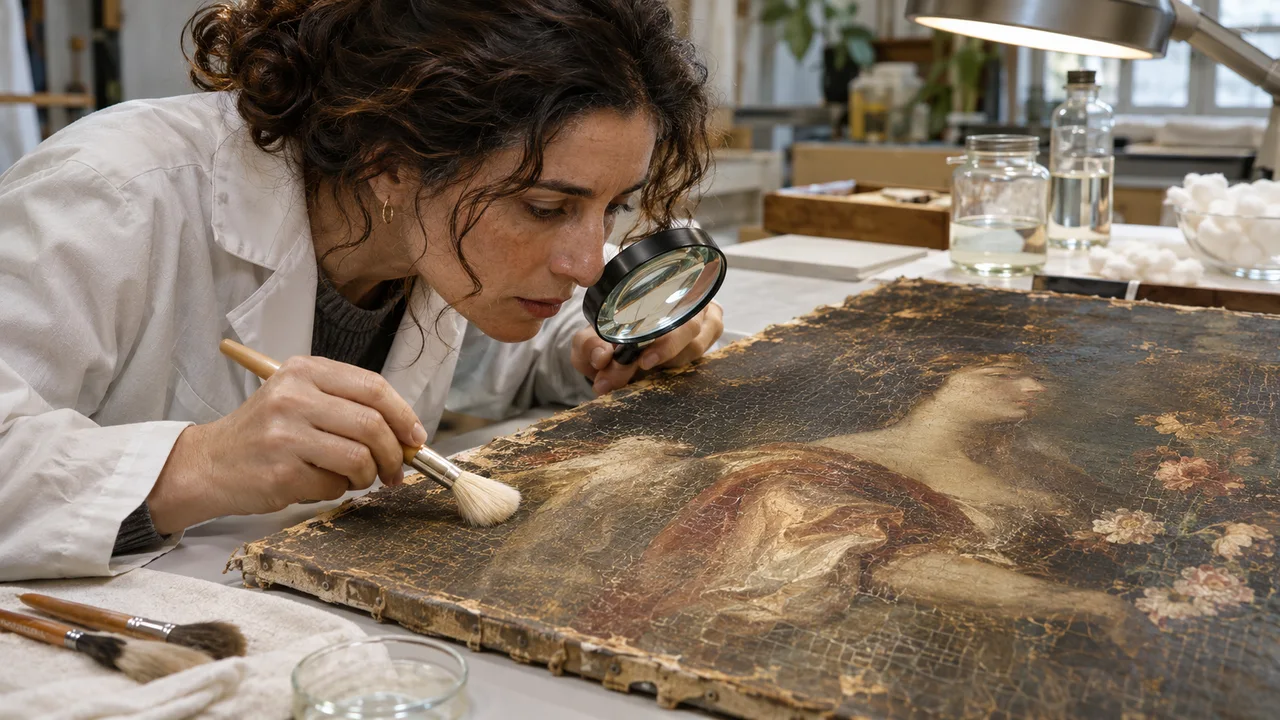
Composition, scale, light, brushwork and support reveal how a painting builds meaning.
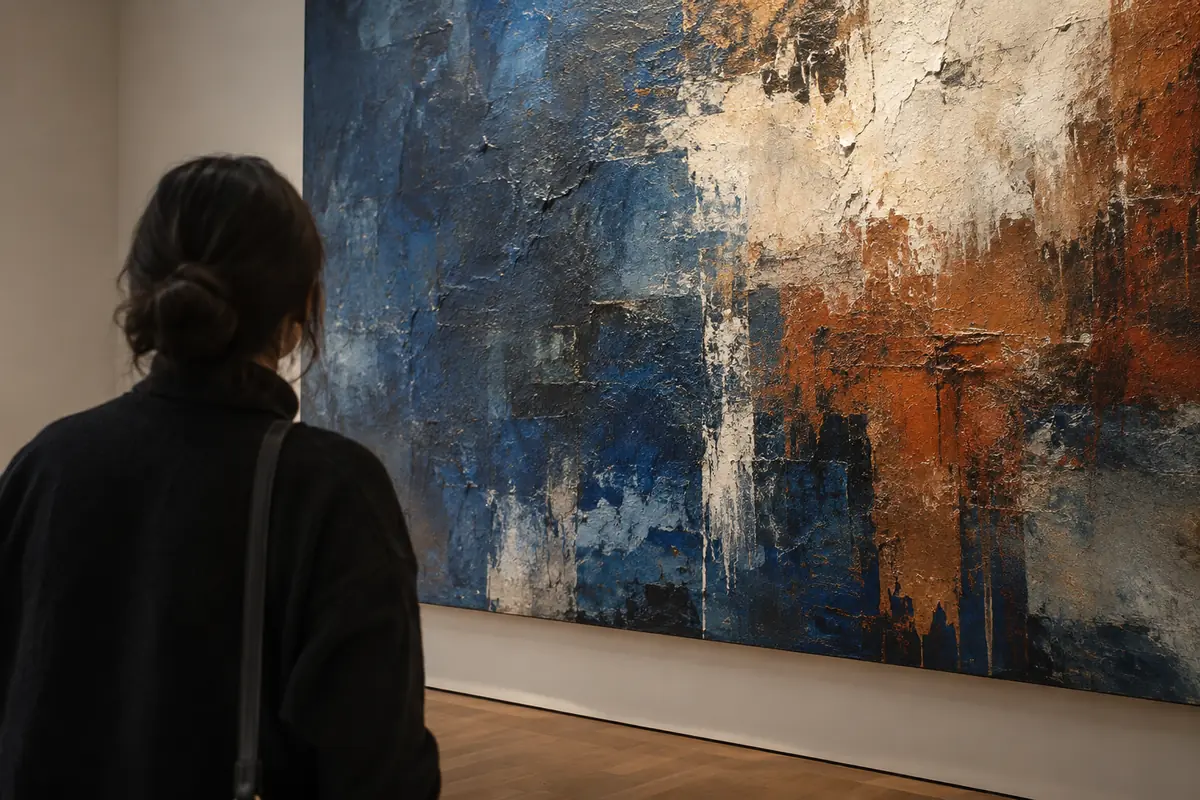
Go further
A first encounter is often immediate: a colour attracts us, a face raises a question or a light establishes a mood. Begin by describing shapes, contrasts, gestures and depth before looking for a complete explanation.
Then consider how the work was made. Thin transparent layers differ from thick paint; visible brushwork asserts the painter’s gesture, while a smooth surface can conceal it. Format, support and original setting matter too.
Patronage, original function, period conventions and artistic choices add further readings without exhausting a picture’s meaning. A good visit allows knowledge and personal response to coexist.
Directory
Looking workshop
A technique is not a style. Two oil paintings can organise space in very different ways. Describe what you see first, then compare your observations with the museum record.
| Reference point | What it changes | What to observe |
|---|---|---|
| Support | Canvas, wood or paper form the material surface; they are distinct from the medium. | Does the label distinguish support and technique? |
| Brushwork | Tool marks give rhythm to a surface. A reproduction cannot convey the full thickness of the paint. | Do the gestures follow the shapes or cross them? |
| Composition | Lines, masses and empty spaces guide attention; the subject alone does not explain their arrangement. | Where does your eye enter, and where does it return? |
| Colour | A colour is understood through neighbouring tones. Screens and lighting affect perception. | Which area has the strongest contrast? |
Can a landscape suggest movement without showing a person in action?
Follow the directions of the brushstrokes, the curves of clouds and the lines of plants. These are observation prompts: an impression of movement is not a measurement of wind or a weather report.
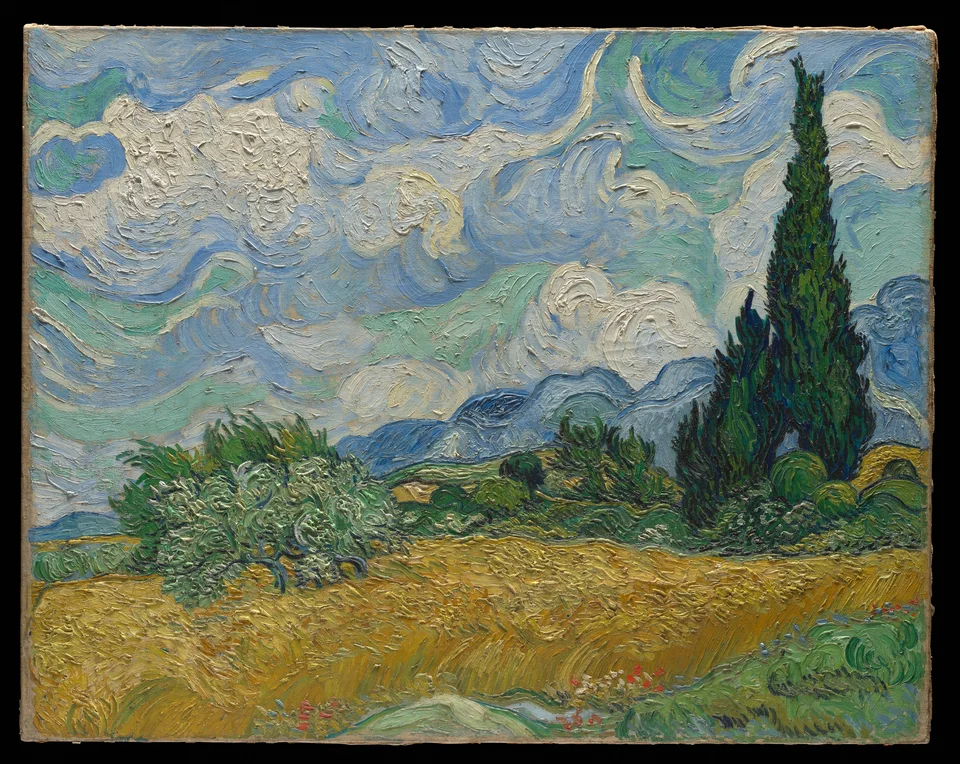
Vincent van Gogh · 1889 · oil on canvas · 73.2 × 93.4 cm
Record and image credit: The Metropolitan Museum of Art · public domain / Open Access ↗Digital reproduction: colour, scale and surface differ from the experience of the original.
From a distance, compare the sky, the strip of land and the trees. The horizontal format connects these areas; the cypress interrupts their layering.
Look closer at the clouds, wheat and foliage. Find directions that repeat and those that change. Their contrast offers a starting point for explaining your impression of movement.
Separate what you observe from what the museum documents. The Met dates this canvas to 1889 and distinguishes it from later studio versions. The same subject can refer to different objects.

The place in pictures
To try this method with paintings, explore the Musée d’Orsay profile and its official links. Choose two works in the collections and compare their composition rather than their fame.
Photograph of the place; the works discussed above are not pictured.
Archive photograph · Cheng-en Cheng from Taichung City, Taiwan · CC BY-SA 2.0 · WebP; adapted display crop.
Read the museum profile →Collection
Specific objects connect techniques, history and collections. These records do not guarantee that works are currently on display.
5 — examples shown
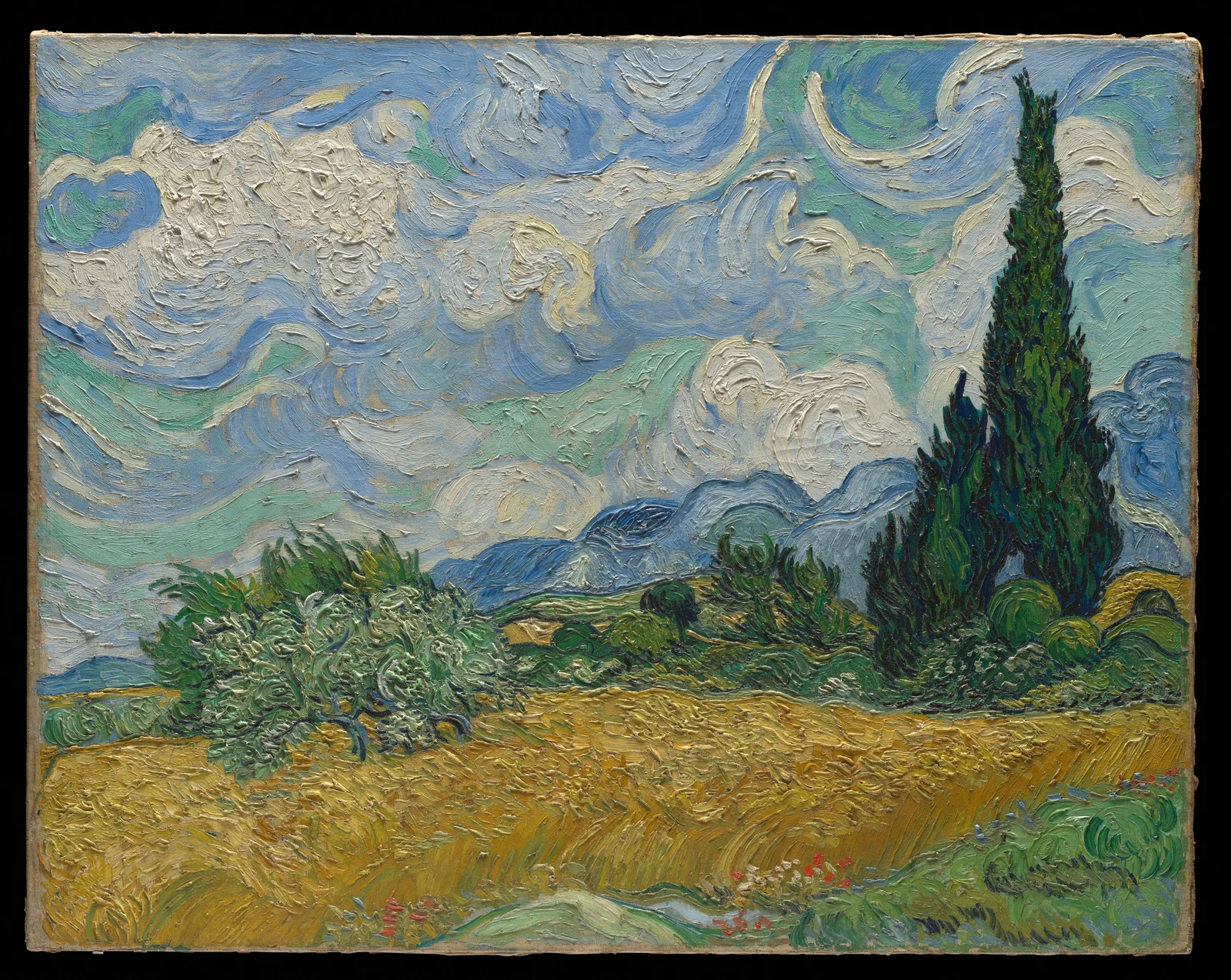
Vincent van Gogh
The vertical cypress contrasts with bands of wheat and curves in the sky. Follow the direction of the brushstrokes: they describe forms while animating the painted surface. Compare the tree’s dark silhouette with the neighbouring blues and yellows.
Museum record ↗ — Wheat Field with Cypresses
Explore the museum — The Metropolitan Museum of Art →
Data consulted on .
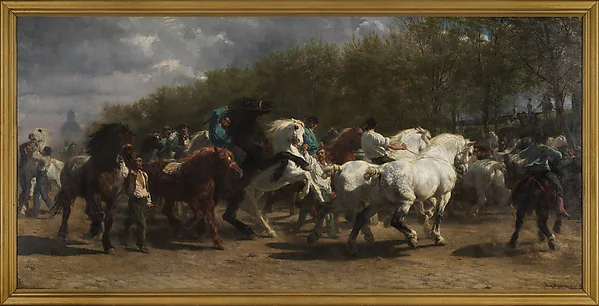
Rosa Bonheur
The painting depicts the horse market on Paris’s Boulevard de l’Hôpital. Over five metres wide, it is greatly reduced in reproduction. Follow the bodies’ directions and the gaps between horses to examine how an observed scene becomes a composition. The Met distinguishes its 1853 Salon appearance from the retouching in 1855.
Museum record ↗ — The Horse Fair
Explore the museum — The Metropolitan Museum of Art →
Data consulted on .
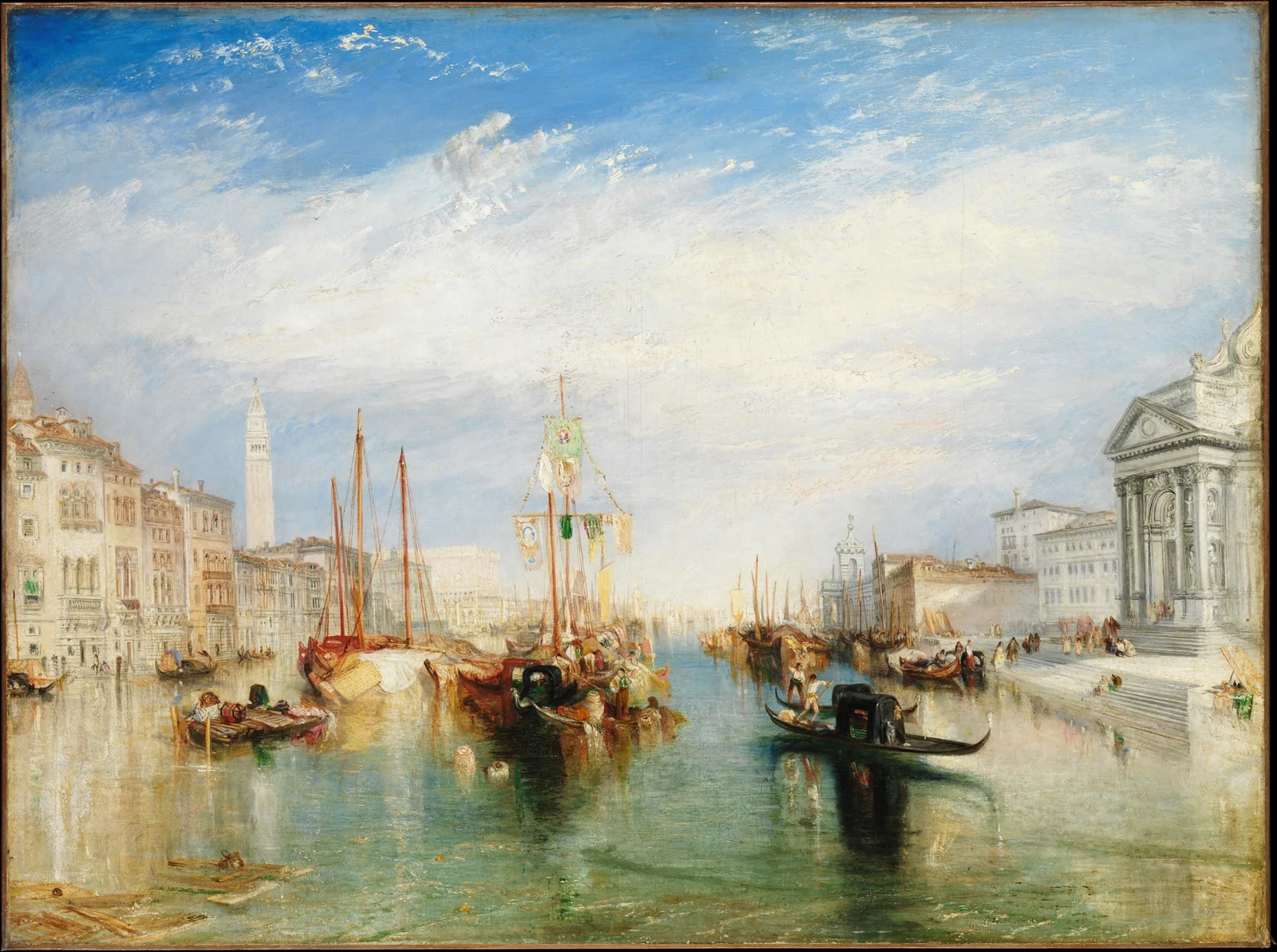
Joseph Mallord William Turner
Turner builds the view around luminous water, boats and architecture that grows lighter in the distance. Compare foreground details with the softer shapes beyond. Depth emerges through tonal values and reflections as well as perspective lines.
Museum record ↗ — Venice, from the Porch of Madonna della Salute
Explore the museum — The Metropolitan Museum of Art →
Data consulted on .
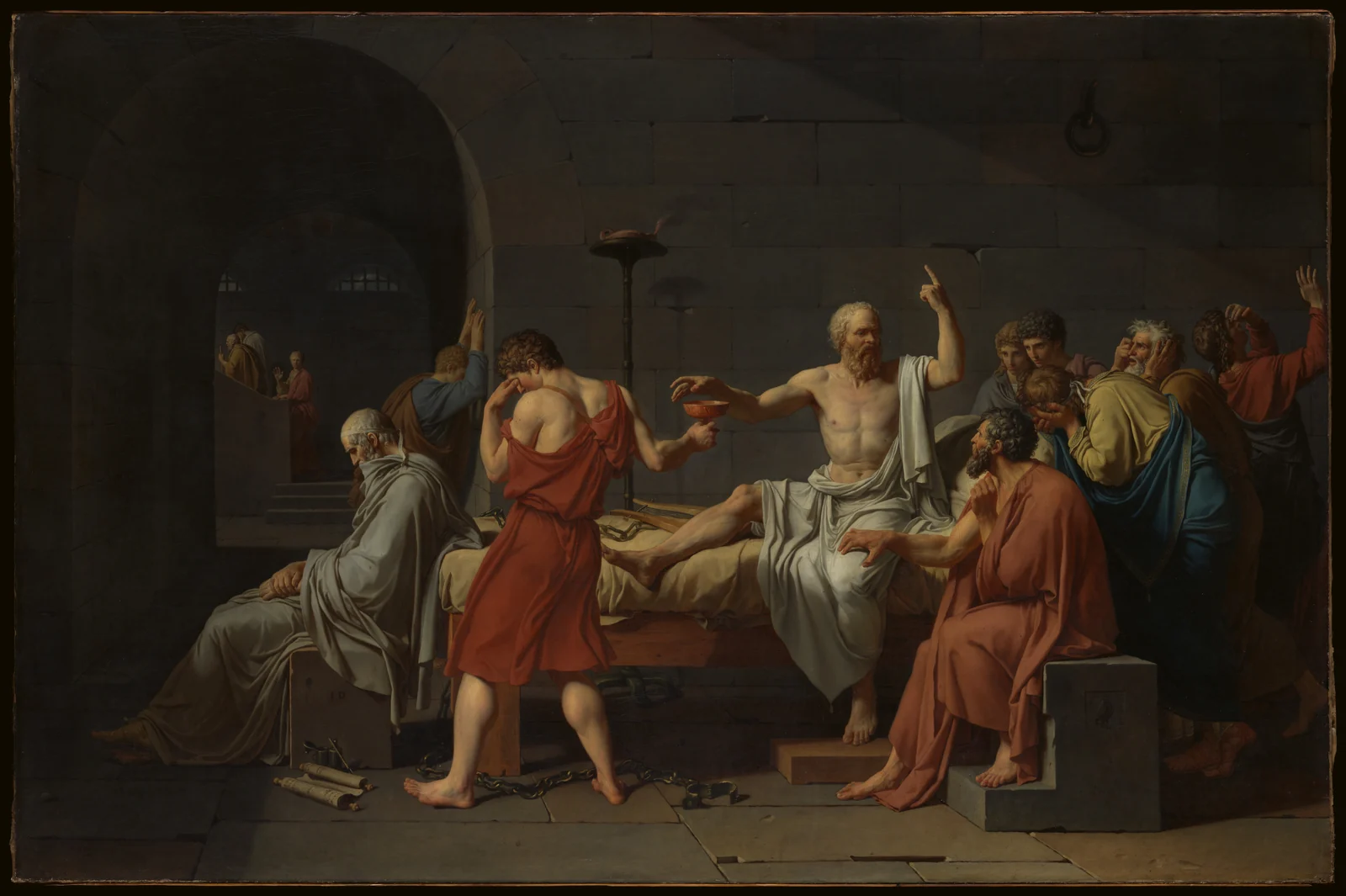
Jacques Louis David
The cup and raised hand organise a network of gestures around Socrates. Observe the figures’ reactions before interpreting the ancient story. The date 1787 refers to the making of the painting, not the depicted event: a label distinguishes subject from object.
Museum record ↗ — The Death of Socrates
Explore the museum — The Metropolitan Museum of Art →
Data consulted on .
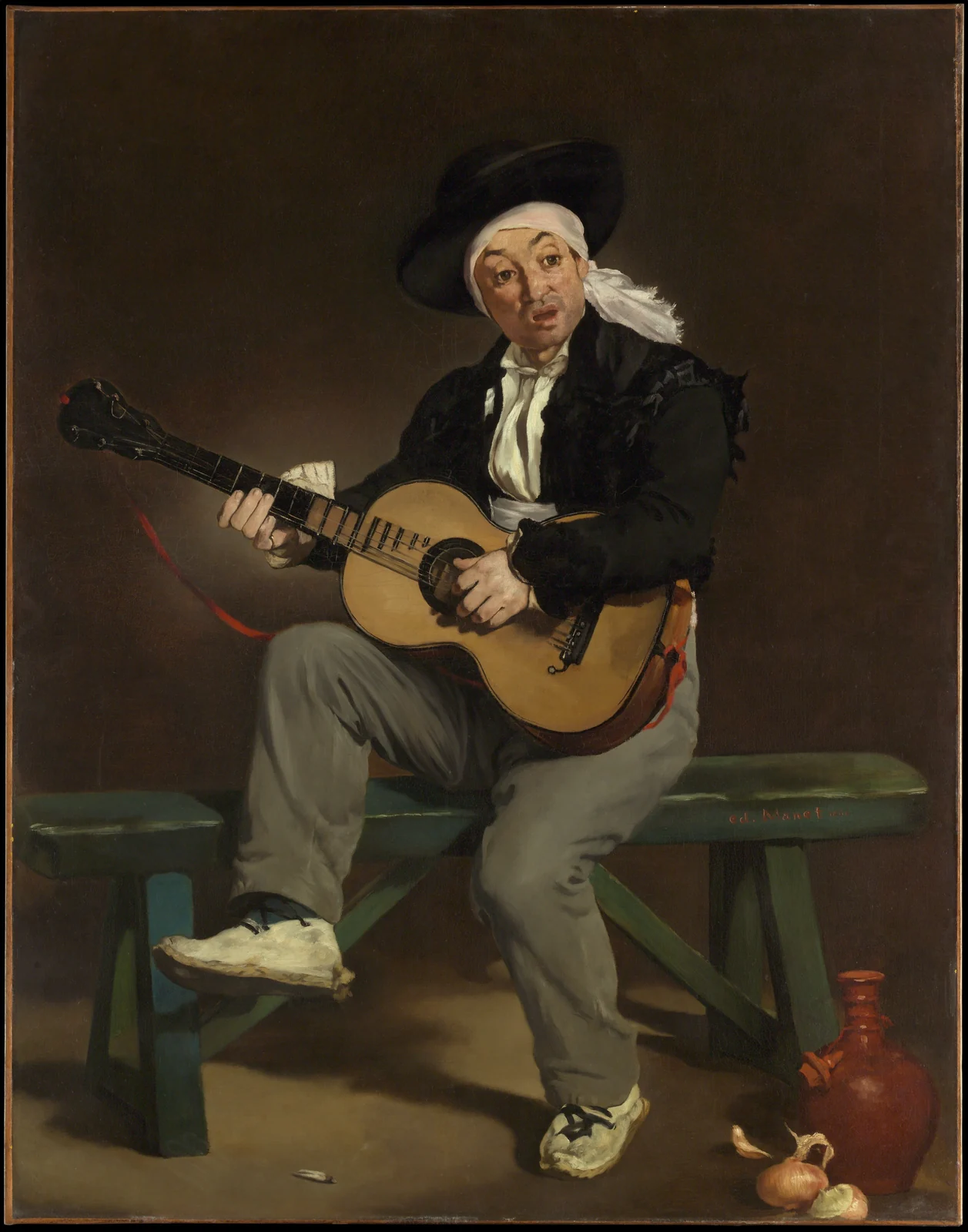
Édouard Manet
Against the dark background, the white shirt and grey trousers structure the musician’s figure. Compare the contours of the face, guitar and shoes: their definition varies. Also observe the space around the sitter and the objects on the floor.
Museum record ↗ — The Spanish Singer
Explore the museum — The Metropolitan Museum of Art →
Data consulted on .
No example matches this selection.
Open Access reproduction · CC0. Resized and converted to WebP, without cropping. Translated title; the museum record retains the reference title.
Practical distinctions to check in collection records and observe during your visit.
| Distinction | Reading point | Questions to ask |
|---|---|---|
| Support and medium | Canvas, panel or paper carry the paint; the technique describes the paint material. Distinguish the frame when reading measurements. | Do the dimensions refer to the image alone? How does the support affect display? |
| Smooth surface and relief | Look at transitions, tool marks and apparent thickness. Enlargement may exaggerate slight relief; a frontal view may hide it. | What changes close up and at a distance? Does lighting reveal gestures? |
| Subject and composition | The subject does not explain the arrangement. Compare planes, axes, empty spaces and relationships between figures before interpreting. | Which detail guides your eye? Does the record support or change your interpretation? |
Look more closely
Techniques, documentation and preparation: choose a question to explore in more depth.
Understand an object’s information without confusing observation, documentation and questions still under discussion.
Read the guide →Observe how an image is made and compare its material effects without diagnosing a work remotely.
Read the guide →Distinguish printing matrix, impression and edition to understand printed images.
Read the guide →Understand display constraints and published information about interventions.
Read the guide →Build a comparison of subject, medium and context rather than reducing it to preference.
Read the guide →An adaptable route that gives children an active role without trying to see everything.
Read the guide →Compare objects while accounting for presentation and the catalogue’s precise terminology.
Read the guide →Archive photographs. WebP conversion and adapted cropping; social previews include the site logo. Images do not guarantee current conditions.