Accessible chronological markers connecting artworks, artists, ideas and collections.
A chronology for orientation, not a box for artworks.
Art movements provide useful reference points, but their borders remain flexible. Artists travel, respond to one another and sometimes work against their period. These dates are starting points for understanding major changes in how art is made and seen.
Chronological reference points
14th–16th centuries
Renaissance
Between the fourteenth and sixteenth centuries, the European Renaissance renewed the study of antiquity, the body and pictorial space. Perspective, observation of nature and portraiture developed differently across Italian and northern European centres.
AI-generated illustrationc. 1600–1750
Baroque
Baroque works often use dramatic light, diagonals and movement. Compare how a painting or sculpture directs attention, and how its intended setting affects the experience.
Pablo Linés (photo)c. 1800–1850
Romanticism
Romantic artists explored emotion, imagination, history and the power of nature. A turbulent landscape can express an experience rather than describe a place neutrally.
AI-generated illustrationc. 1840–1880
Realism
Realism gave contemporary life and ordinary people a prominent place in art. Consider the subject, working conditions and social setting as well as the accuracy of the image.
AI-generated illustration1860–1880
Impressionism
From the 1860s, Impressionist artists pursued changing light, modern life and the sensation of a moment. Visible brushwork, juxtaposed colour and outdoor painting challenged academic expectations while relying on careful framing.
1886–1910
Post-Impressionism
Post-Impressionism groups distinct approaches rather than a single style. Compare how artists organize form, intensify colour or use a motif to convey an individual response.
Martofliak1905–1908
Fauvism
Fauvist painters used intense, non-naturalistic colour and bold brushwork. Ask whether colour describes an object, organizes the picture or creates an expressive contrast.
1907–1920
Cubism
Cubism questioned traditional perspective by showing subjects from several angles at once. Forms were analysed, fragmented and rebuilt; collage later brought ordinary materials directly into the artwork.
Ebfsm1916–1924
Dada
Dada challenged artistic conventions in the context of the First World War. Collage, found objects, performance and chance questioned what could count as art.
AI-generated illustration1924–1960
Surrealism
Formally launched in 1924, Surrealism explored dreams, the unconscious, chance and unexpected association across painting, photography, film, poetry and objects.
Beyond My Ken1940–1960
Abstract Expressionism
In the 1940s and 1950s, Abstract Expressionism made New York central to a new international scene. Gesture, physical trace, expansive colour and large scale reshaped the relationship with painting.
1970–
Contemporary Art
Contemporary art is not one style. Since the 1970s it has encompassed painting, sculpture, photography, video, performance, installation, digital and participatory practices.
Art guide
Movements that changed how we see.
Accessible chronological markers connecting artworks, artists, ideas and collections.
Art movements offer reference points but do not replace the study of an object. Dates, techniques and composition allow a more precise comparison than a simple classification.
A four-step comparison method
Reference point
What it changes
What to observe
Identify
Find artist, title, date, medium and inventory number in each record.
Are you comparing identified objects or uncaptioned reproductions?
Describe
Start with visible features: format, planes, gestures, volumes and contrasts.
Which detail can you point to without interpretation?
Contextualise
Relate observations to documented place, period and information.
Which source supports the connection?
Qualify
Resemblance proves neither direct influence nor membership of one movement.
What differences does your comparison reveal?
A question to start with
Do two oil landscapes necessarily offer the same way of looking?
Explore a way of reading
No. First compare formats, sky and ground, brushwork and the viewer’s position. A shared medium can support different arrangements. Records then supply context for a historical comparison.
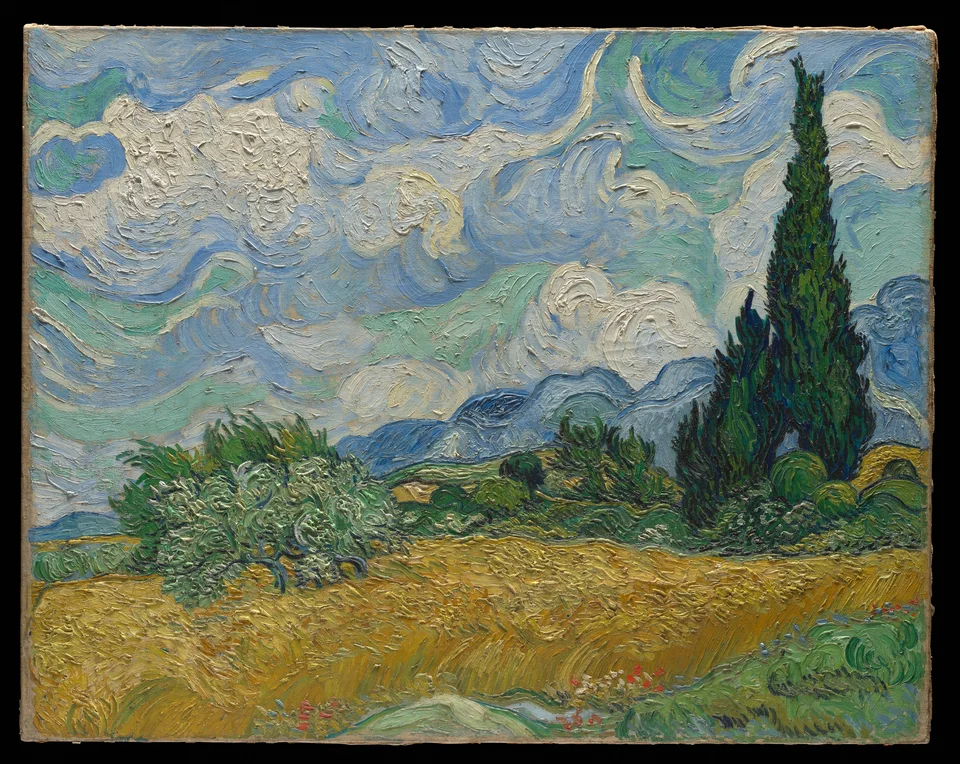
Wheat Field with Cypresses
Vincent van Gogh · 1889 · oil on canvas · 73.2 × 93.4 cm
Digital reproduction: colour, scale and surface differ from the experience of the original.
One painting, three viewing distances
The whole picture
From a distance, compare the sky, the strip of land and the trees. The horizontal format connects these areas; the cypress interrupts their layering.
Brushwork and rhythm
Look closer at the clouds, wheat and foliage. Find directions that repeat and those that change. Their contrast offers a starting point for explaining your impression of movement.
Back to the record
Separate what you observe from what the museum documents. The Met dates this canvas to 1889 and distinguishes it from later studio versions. The same subject can refer to different objects.
The place in pictures
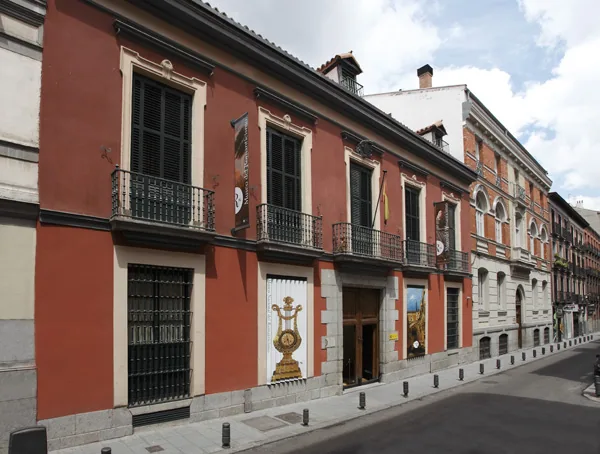
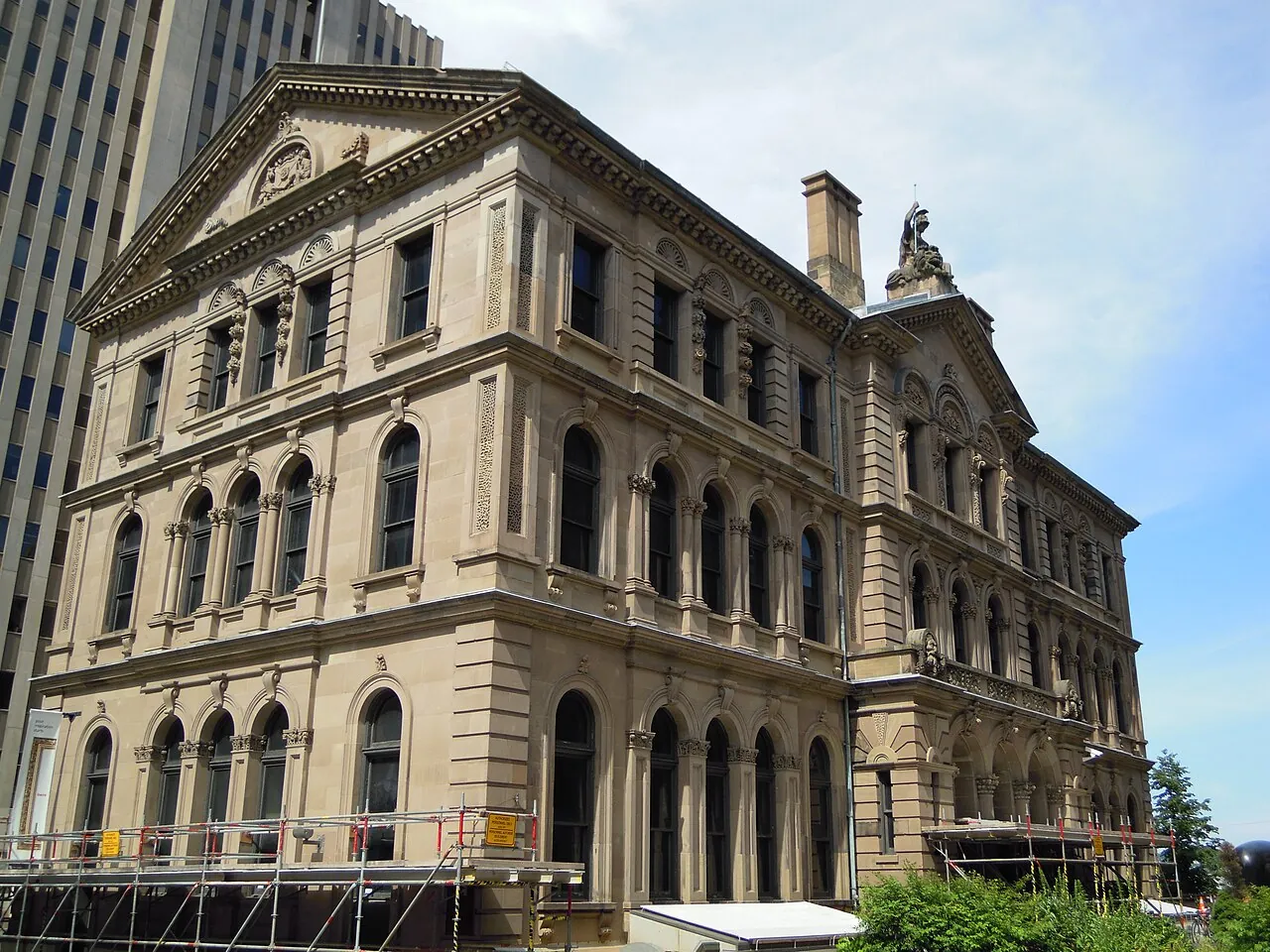
Musée du Louvre
In a large museum such as the Louvre, choose a few works to practise this method. Comparing two clearly identified objects can teach more than rushing through a succession of rooms.
Photograph of the place; the works discussed above are not pictured.
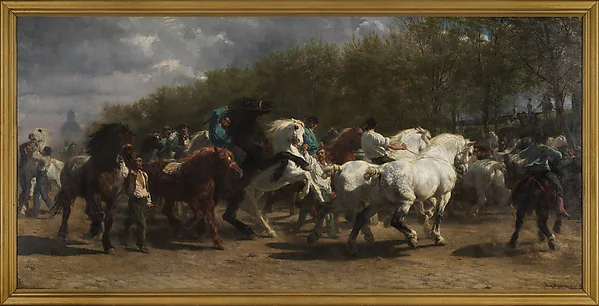
The painting depicts the horse market on Paris’s Boulevard de l’Hôpital. Over five metres wide, it is greatly reduced in reproduction. Follow the bodies’ directions and the gaps between horses to examine how an observed scene becomes a composition. The Met distinguishes its 1853 Salon appearance from the retouching in 1855.