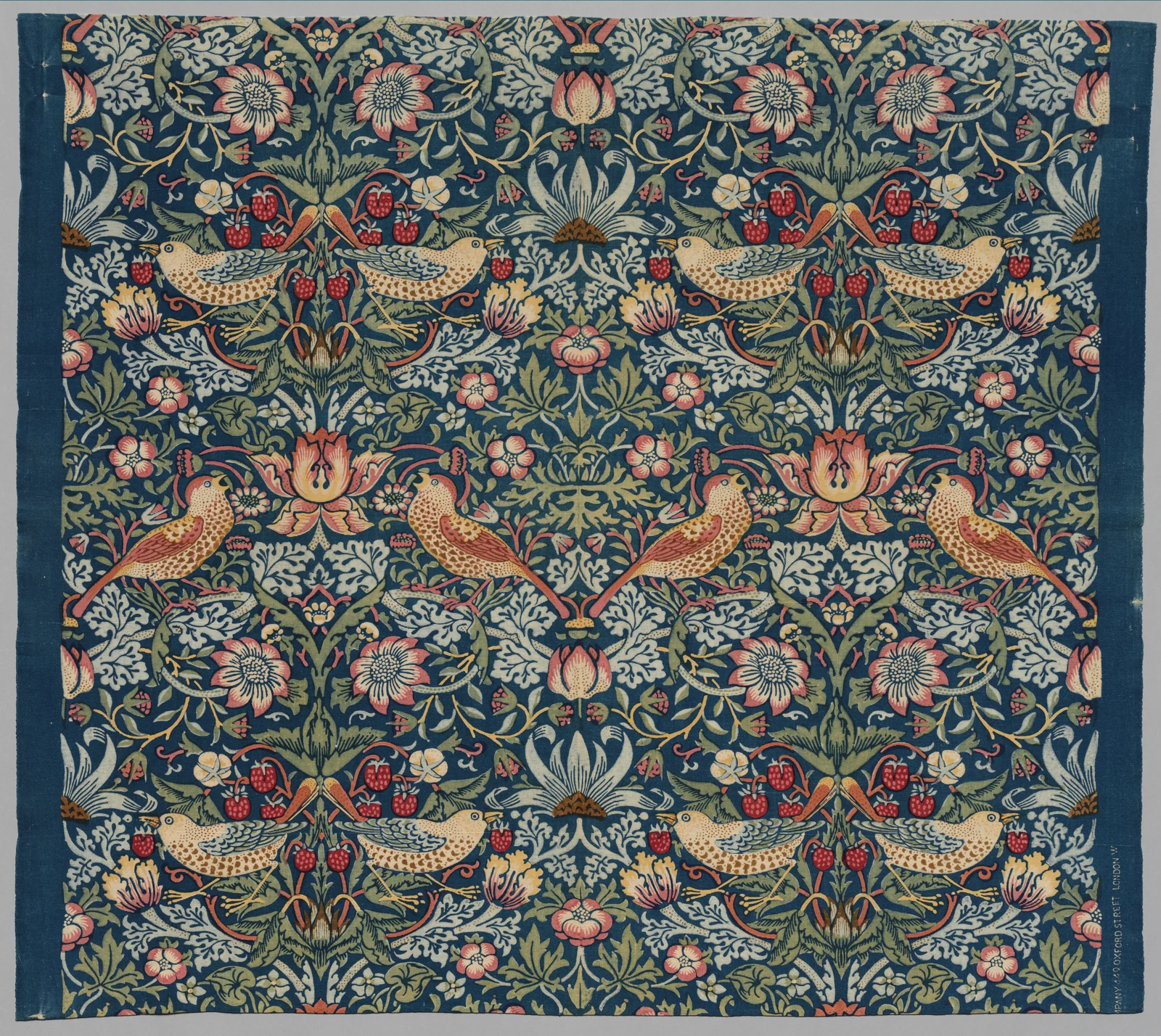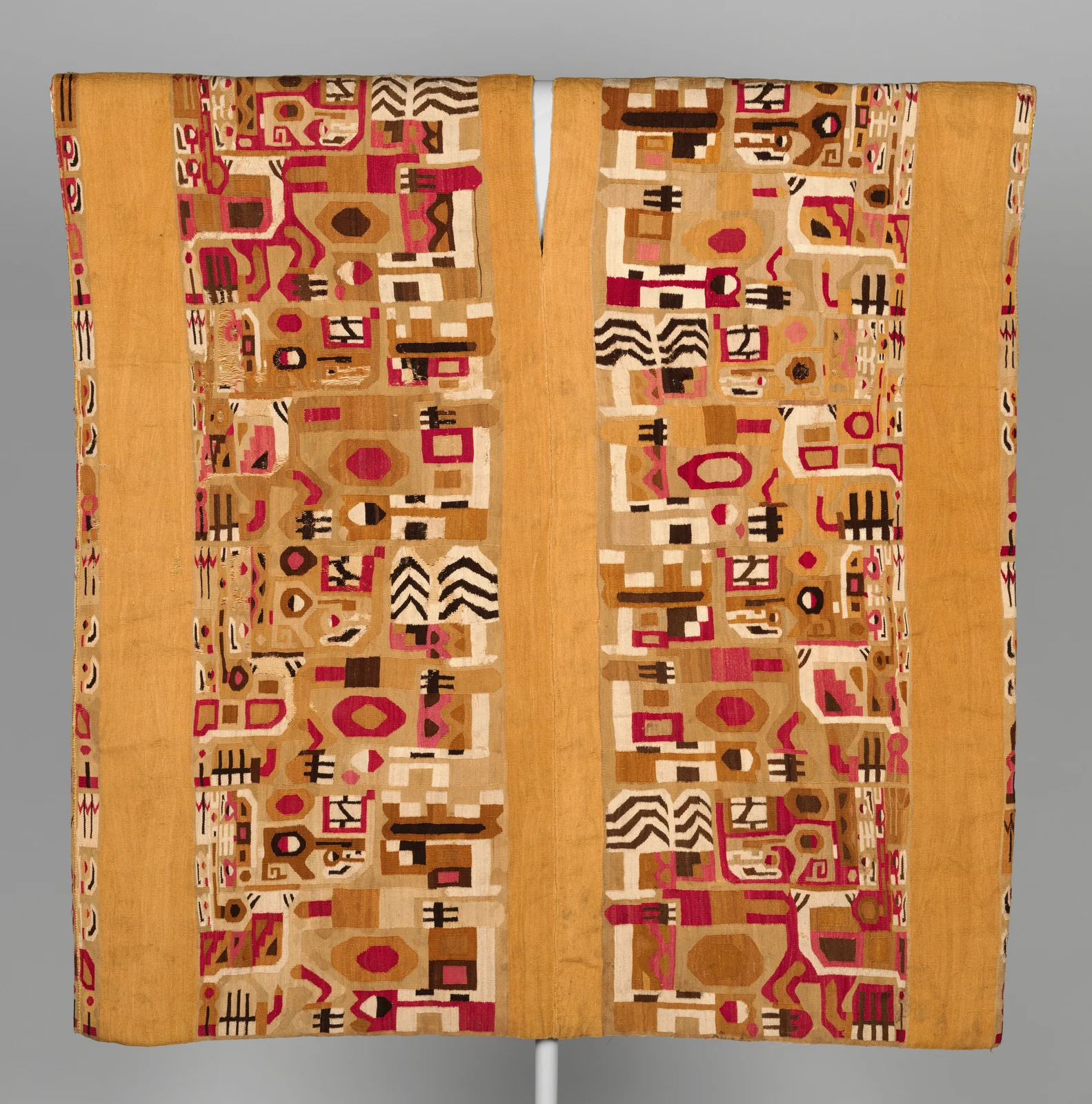
Observe construction before pattern
Distinguish fibre, manufacture of the support and decoration. A textile may combine weaving, embroidery, printing or appliqué; these terms describe different operations. Record the museum’s exact technique. An image allows pattern comparison but does not guarantee fibre identification. Look for details and the piece’s dimensions to understand the scale of the work.
Read the rhythm of the design
Choose a repeated element and follow its transformations: symmetry, colour changes, interruptions, borders or differences between centre and edge. Separate observation from symbolic interpretations in the record. A motif can circulate between workshops, regions and periods. When suggesting a connection, compare dates and techniques as well as the decoration’s outline.
Recover function and presentation
Clothing, tapestry, fragments and contemporary textile art require different approaches. Ask how the piece was worn, hung or used when documented. Flat display can hide a garment’s movement; a mannequin photograph reflects a curatorial choice. Separate original function from current condition and the way the object is exhibited.
Compare without reducing traditions
The Art Institute of Chicago’s textile department brings together different regions and periods, including Andean, Japanese and European textiles and modern creations. Compare through a concrete question: how does a border organise a surface, or a technique create relief? Keep local terms and recorded attributions. The absence of an artist’s name does not mean the absence of individual skill.
Common questions
Does a fragment represent the entire textile?
No. Distinguish fragment, preserved dimensions and original format when known.
Are embroidery and weaving synonymous?
No. Weaving constructs a support from threads; embroidery works on a support. A piece may combine both.
Method and references
Reading advice and exercises written for this guide. The references extend the documentary and technical explanations. Check visit conditions with each institution.
Continue reading
- Ceramics: clay, surface and function
- African arts: reading contexts and attributions
- Comparing two artworks with a method
- Explore : Design and decorative arts: reading objects beyond their use.
- Explore : African arts: looking at histories, materials and circulation.
- Explore : Asian arts: materials, gestures and modernities in dialogue.