Materials
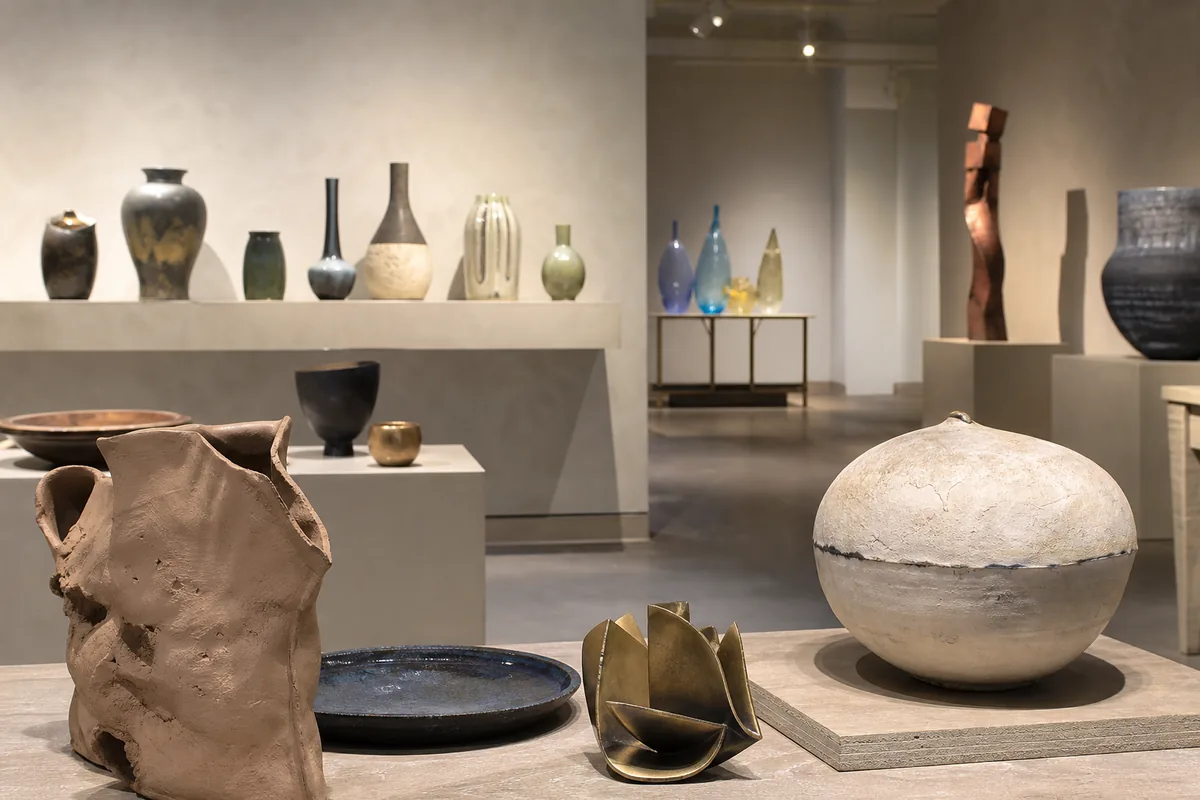
Stone, wood, metal, clay, plaster, resin and found materials determine weight, texture and resistance.
Discipline
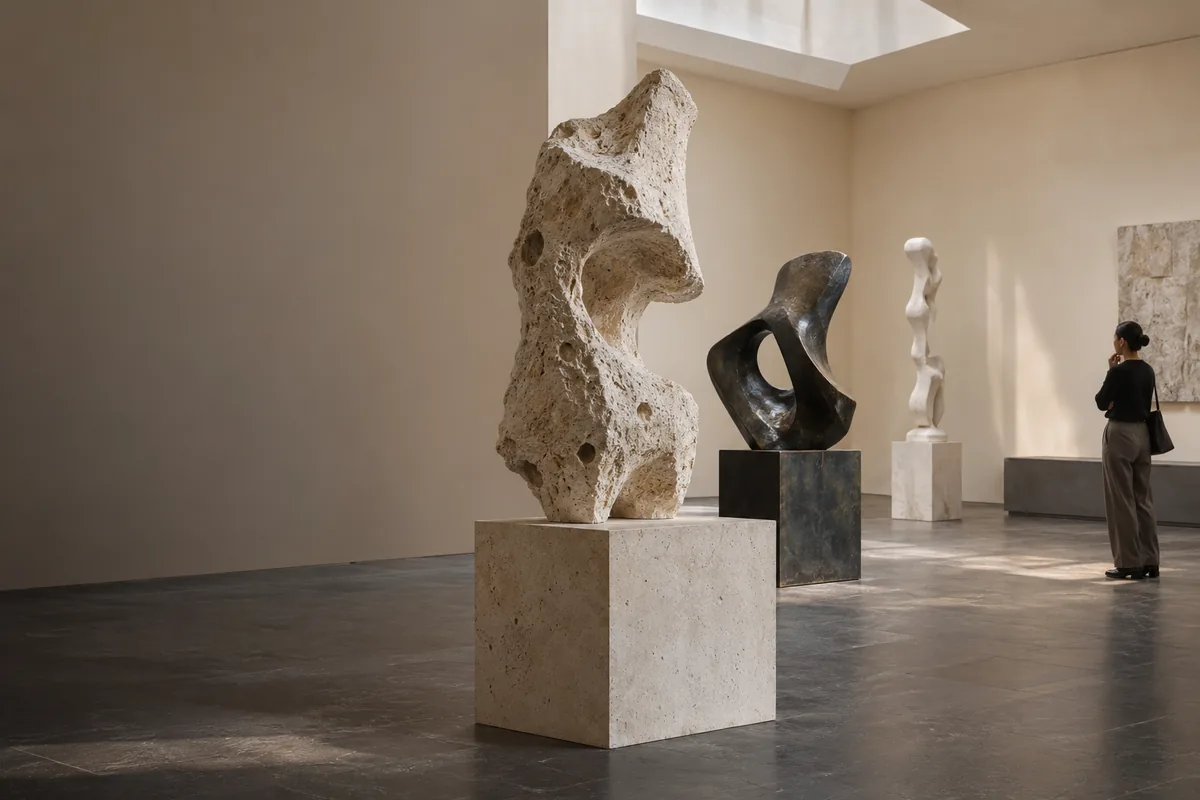
Carving, modelling, casting and assembling bring together material, body and a moving point of view.
Stone, wood, metal, clay, plaster, resin and found materials determine weight, texture and resistance.
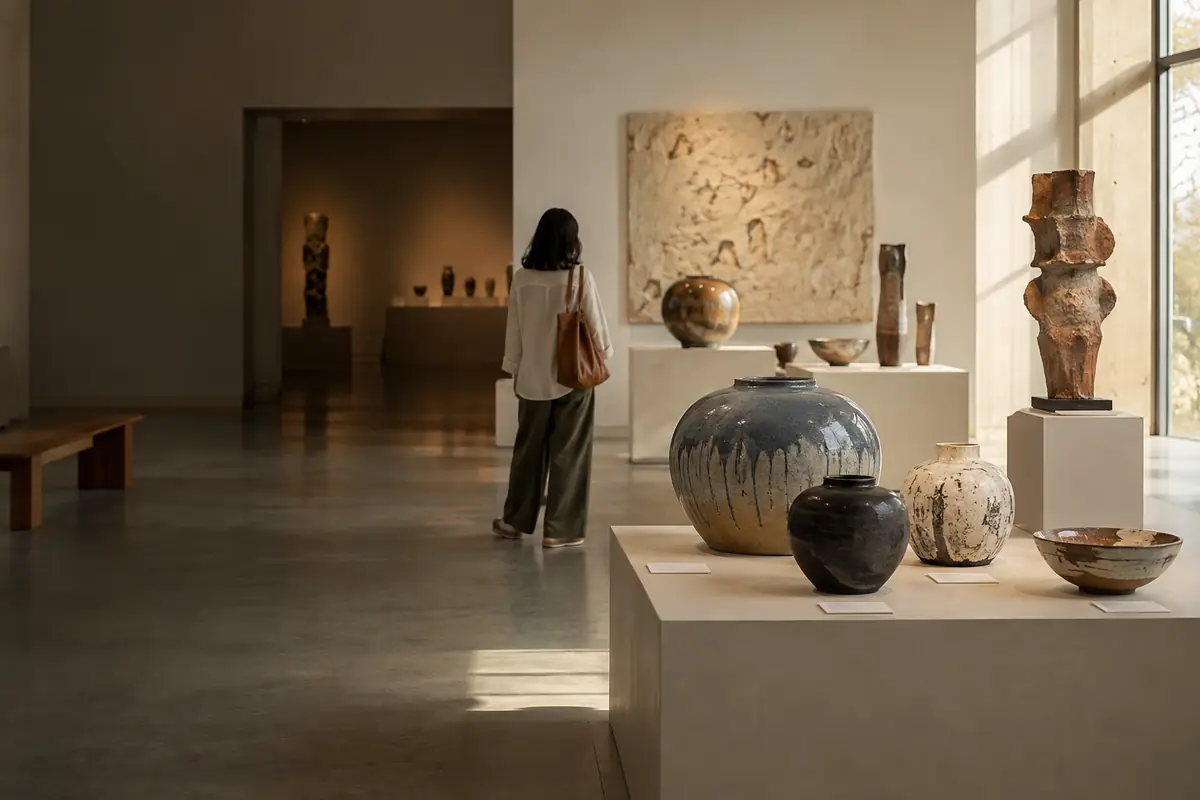
Carving removes material; modelling adds it; casting reproduces; assembly brings separate elements together.
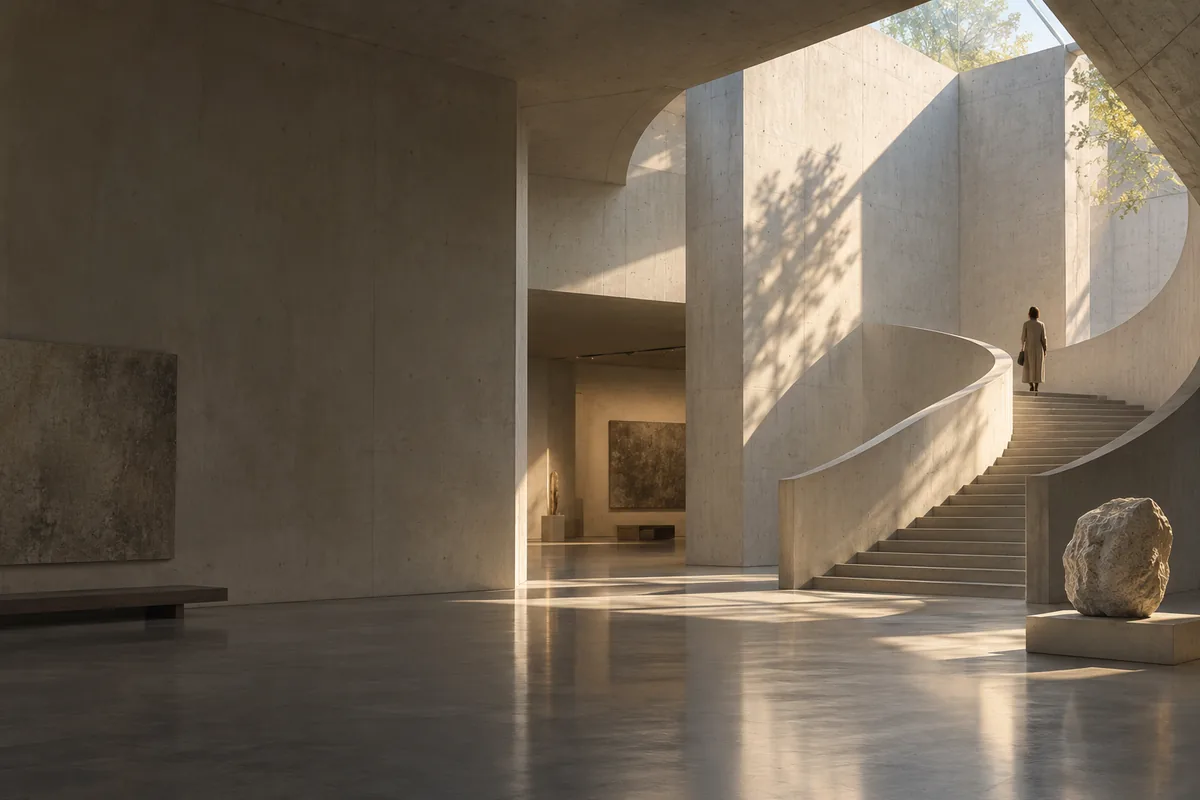
Moving around a work reveals how solids, voids, scale, light and setting interact.
Go further
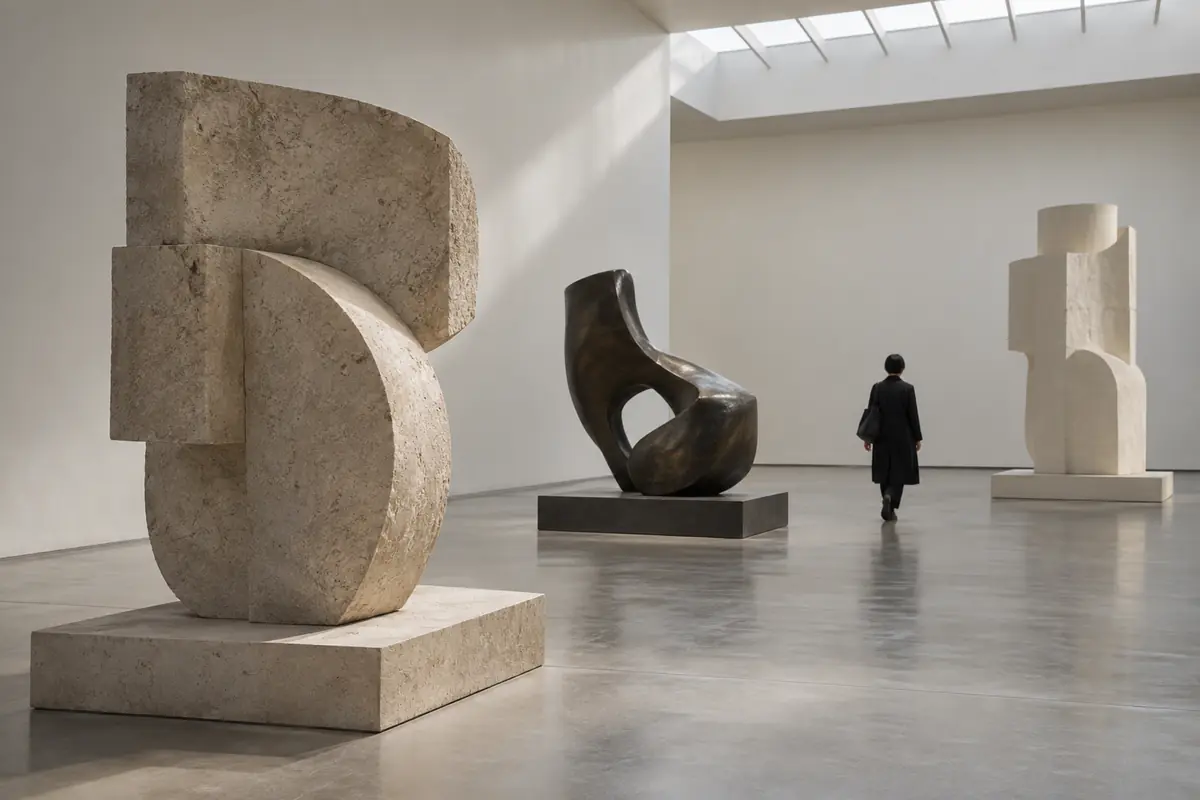
Sculpture shares our space. It has height, apparent weight, a front and sometimes a hidden back. Walking around it can turn mass into lightness, make a void central or transform a silhouette.
Materials also record labour. Tool marks in stone, joins in an assembly, bronze patina and the fragility of an installation reveal artistic decisions and the physical history of a work.
Plinth, building, landscape and street all change perception. Sculpture organises distance, frames views and responds to its surroundings as well as representing a subject.
Directory
Looking workshop
Volume unfolds as you move. Start with a frontal view, then a side view where circulation allows. The base, light and distance are part of the conditions of looking.
| Reference point | What it changes | What to observe |
|---|---|---|
| Carving | Material is removed to make the form. A polished surface may obscure tool marks. | Is the material precisely named? |
| Modelling | A malleable material is worked into shape. A model may be used to produce a cast. | Are you looking at the model or a version made from it? |
| Casting | Metal takes shape through a mould. Model and casting dates can differ. | Does the label name a foundry and casting date? |
| Assembly | Elements are brought together. Joints and gaps can become expressive choices. | How are the parts held together? |
Do two bronzes made from the same model necessarily have the same date?
No. Distinguish conception, model, any enlargement and the casting of this example. An inventory number identifies the version studied. Visual resemblance does not establish a date or edition.

The place in pictures
Musée Rodin offers a setting for studying sculpture, its base and its surroundings. Check the work’s availability with the museum, then observe how shadows change from one side to another.
Photograph of the place; the works discussed above are not pictured.
Archive photograph · Jean-Pierre Dalbéra · CC BY 2.0 · WebP; adapted display crop.
Read the museum profile →Collection
Specific objects connect techniques, history and collections. These records do not guarantee that works are currently on display.
6 — examples shown
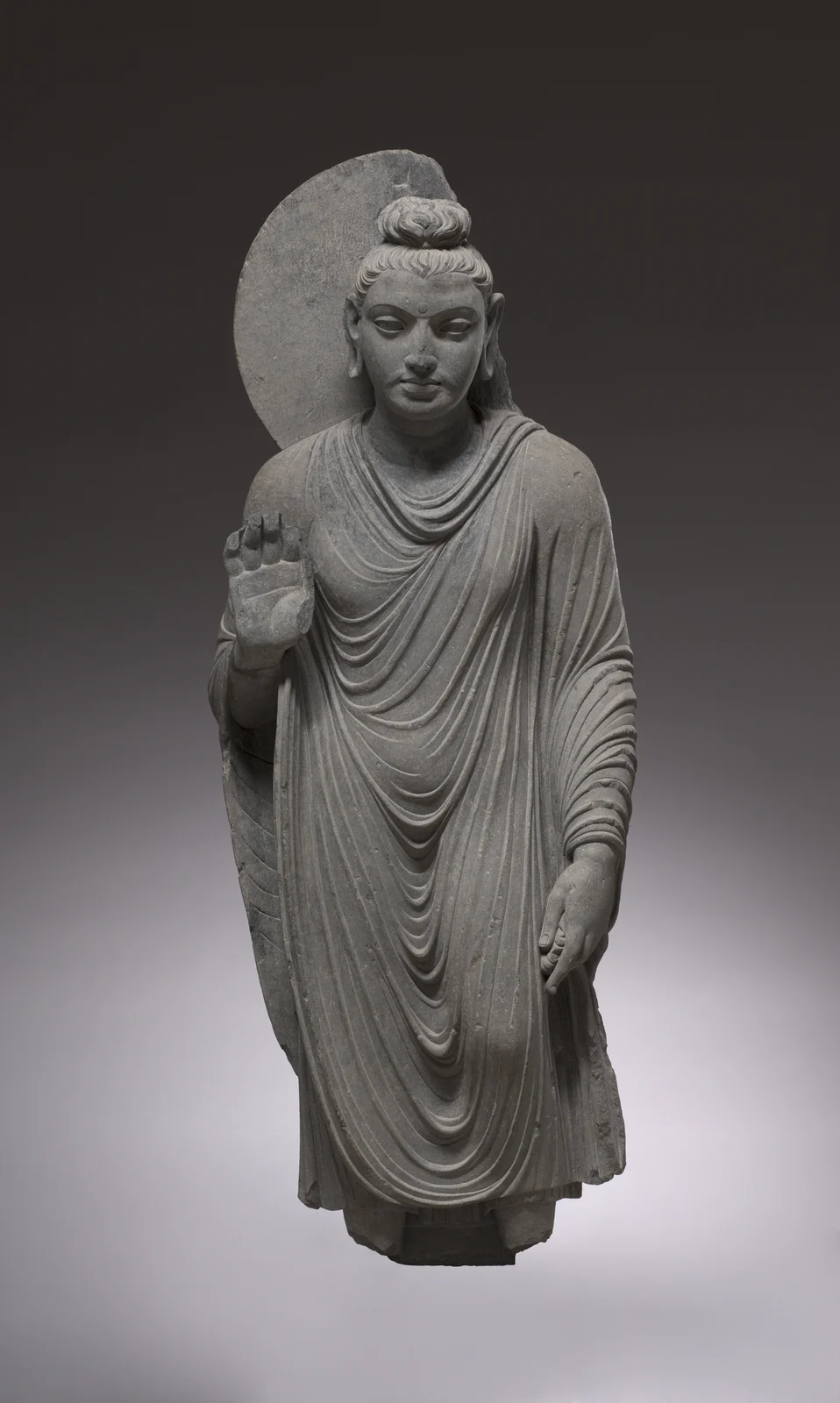
The garment’s closely spaced folds contrast with the calm face. Follow the sculpture from halo to drapery, distinguishing surviving relief and missing parts. This Gandharan work offers a counterpoint to the bronze Nataraja: material, posture and religious context differ.
Museum record ↗ — Standing Buddha
Explore the museum — Cleveland Museum of Art →
Data consulted on .
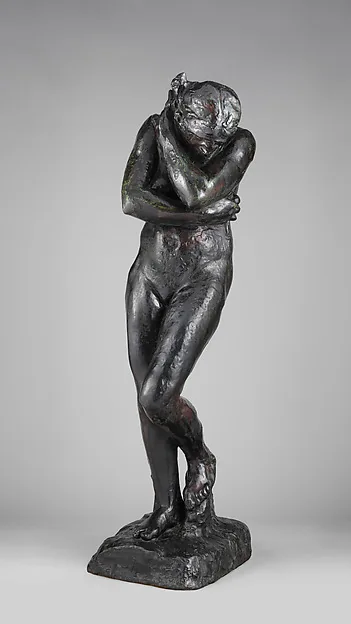
Auguste Rodin
The model dates to 1881, but this bronze was cast in 1910: the dates describe different stages. The Met commissioned the cast from a plaster model in Rodin’s studio. Observe the folded arms and twisting body; a frontal photograph does not reveal every relationship between the volumes.
Explore the museum — The Metropolitan Museum of Art →
Data consulted on .
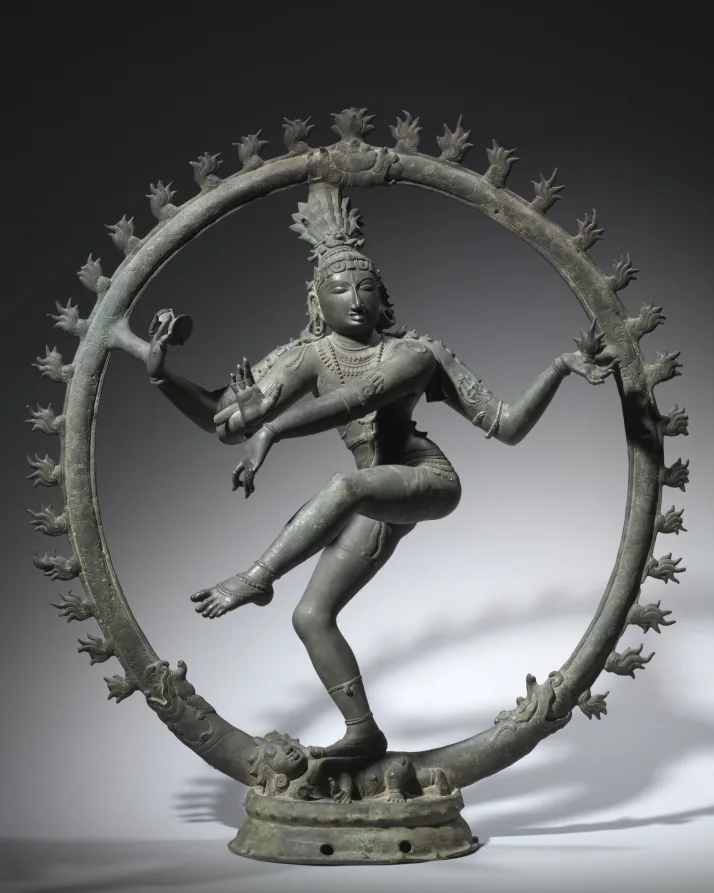
The record places this bronze in Chola-period Tamil Nadu. It links the drum to passing time, fire to destruction and the trampled figure to ignorance. Describe the arms, supports and circle first, then compare your observation with this documented interpretation: recognising a motif does not by itself explain its meaning.
Museum record ↗ — Nataraja, Shiva as the Lord of Dance
Explore the museum — Cleveland Museum of Art →
Data consulted on .
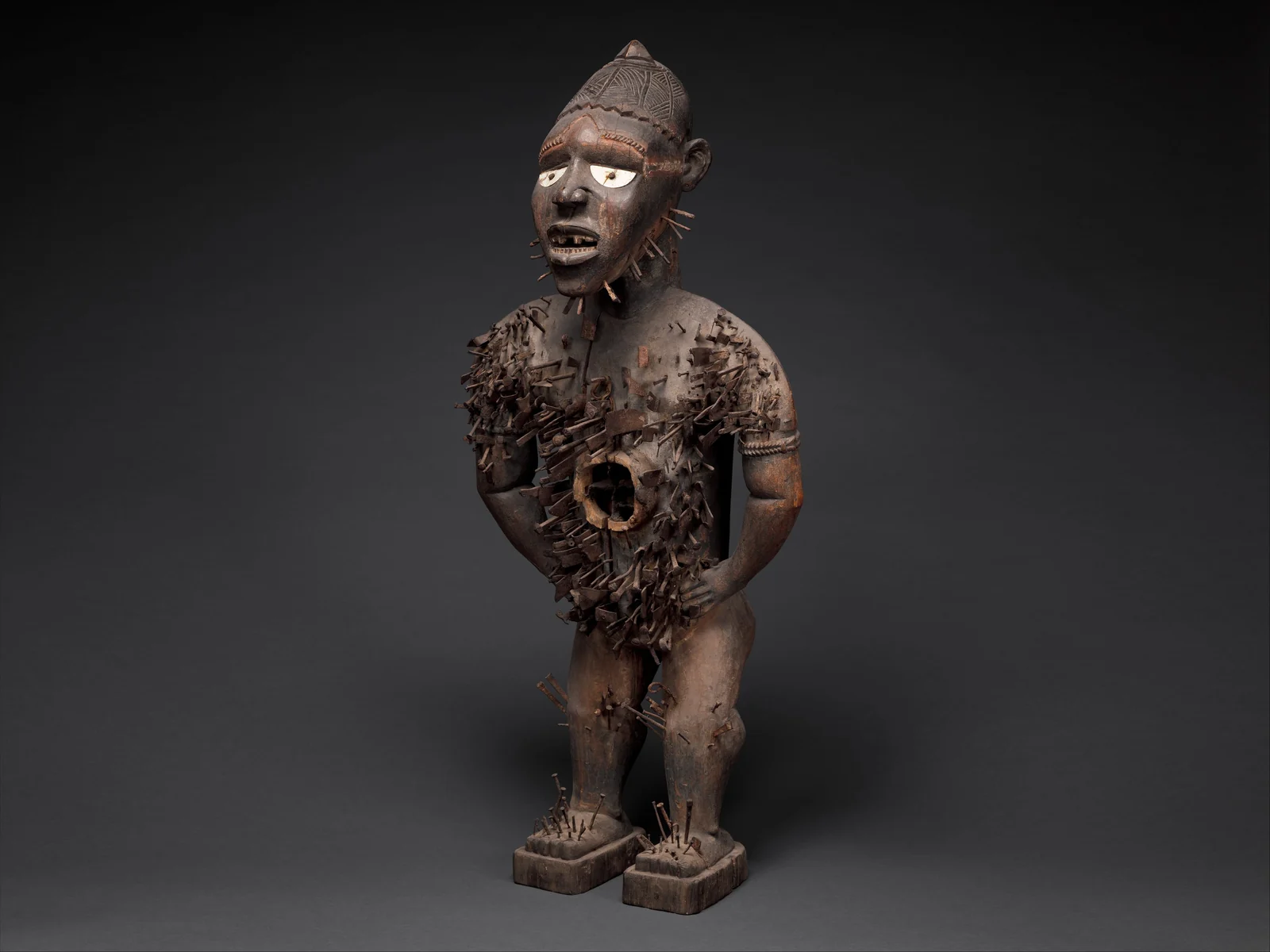
Yombe-Kongo · nganga
The Met attributes this work to collaboration between a Yombe-Kongo artist and a nganga, a ritual specialist. Metal elements relate to pledges and settling community disputes. Examine the posture and added materials without treating the figure as decoration alone. The record locates its origin in the Republic of the Congo or Cabinda, Angola.
Museum record ↗ — Mangaaka power figure (Nkisi N’Kondi)
Explore the museum — The Metropolitan Museum of Art →
Data consulted on .
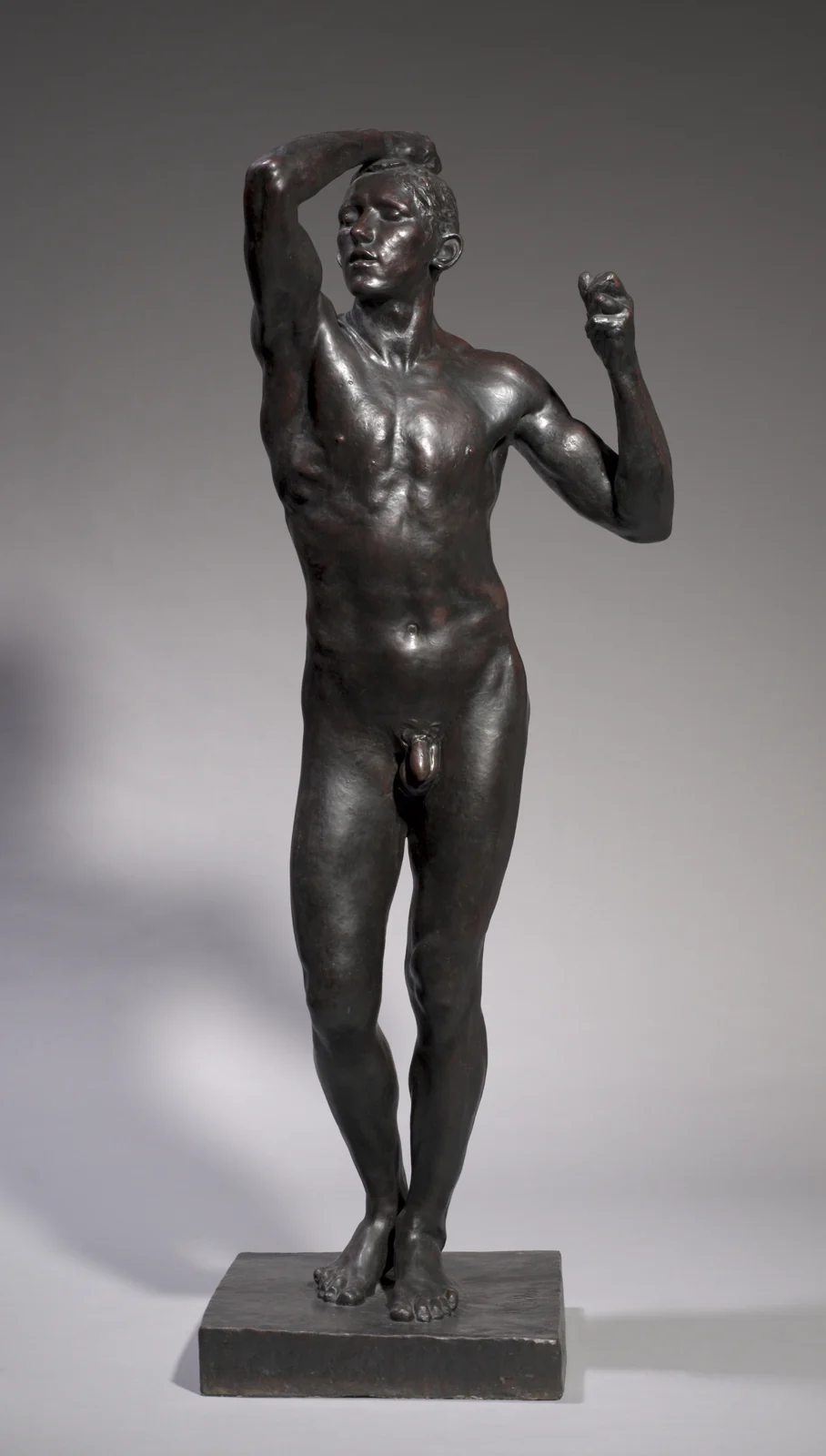
Auguste Rodin
The nearly life-size body invites comparison of balance, twist and raised arms. The museum dates this cast’s commission to 1916: a model’s date does not date every bronze. Measurements include the base, while the patina also affects how relief catches the eye.
Museum record ↗ — The Age of Bronze
Explore the museum — Cleveland Museum of Art →
Data consulted on .
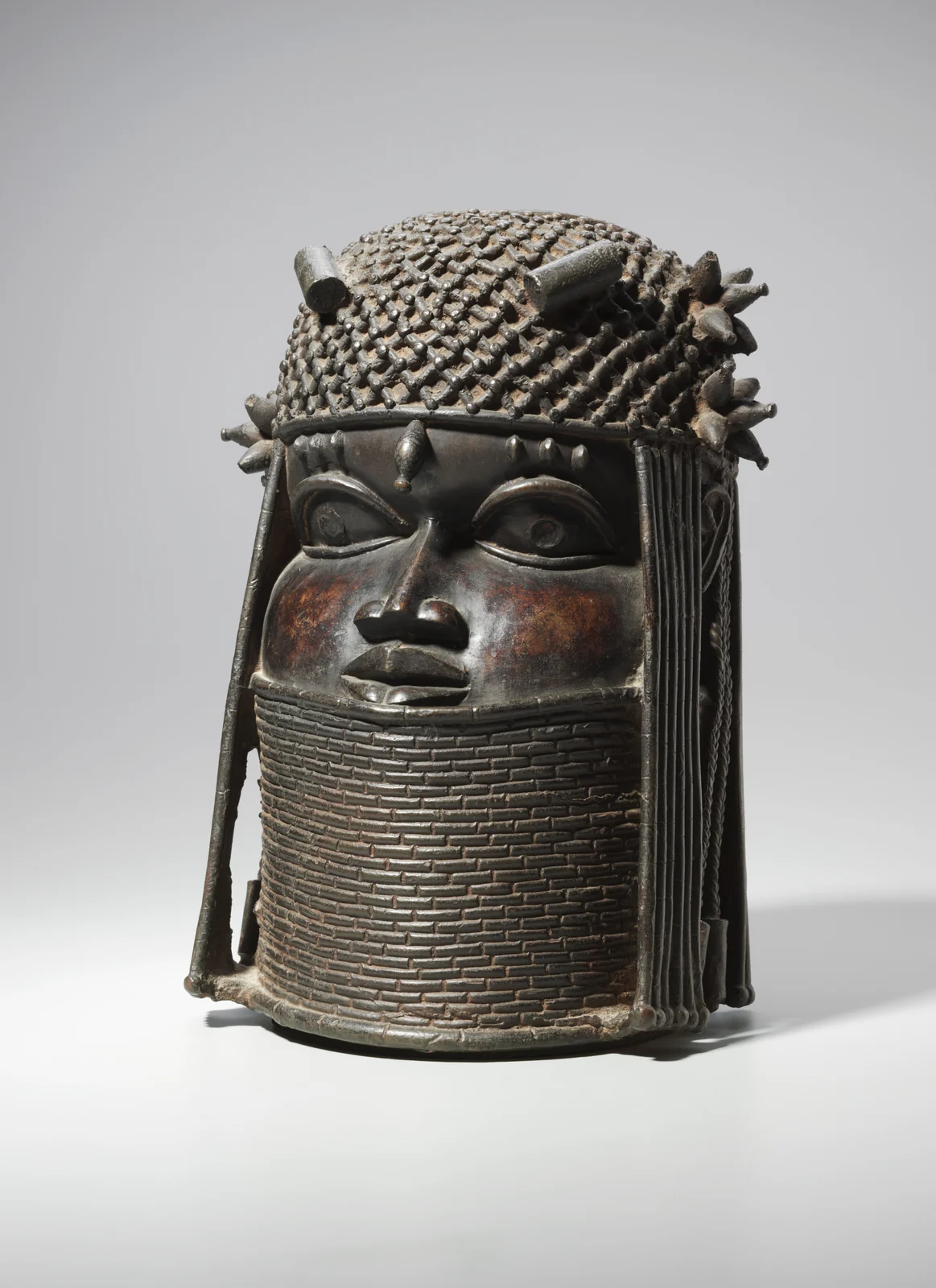
Beaded collars and a cap frame an idealised face; the head once supported a tusk on an ancestral altar. Published provenance records its transfer to Europe after the Siege of Benin in 1897. Read this history alongside the object’s form and religious purpose.
Museum record ↗ — Ancestral Commemorative Head, uhunmwun-elao
Explore the museum — Cleveland Museum of Art →
Data consulted on .
No example matches this selection.
Open Access reproduction · CC0. Resized and converted to WebP, without cropping. Translated title; the museum record retains the reference title.
Practical distinctions to check in collection records and observe during your visit.
| Distinction | Reading point | Questions to ask |
|---|---|---|
| Main face and movement | Display may favour one face or allow movement around the object. Available views do not necessarily reveal its original setting. | What remains hidden? Are side or rear views documented? |
| Model and cast | A model and the surviving object may have different dates. Read material, casting, edition and dimensions together. | Which stage does the date identify? Are other examples documented? |
| Work and pedestal | The pedestal, its height and lighting affect the relationship with the body. Describe display separately from the sculpture’s properties. | Does the pedestal belong to the work? How do shadows and voids change the silhouette? |
| Viewpoint and surroundings | Choose two permitted viewing positions and describe what disappears or overlaps. Separate observation from assumptions based on one photograph. | How do the pedestal, distance and neighbouring works affect the volume? |
Look more closely
Techniques, documentation and preparation: choose a question to explore in more depth.
Move beyond a frontal image to observe silhouettes, gaps and the relationship with a setting.
Read the guide →Build a comparison of subject, medium and context rather than reducing it to preference.
Read the guide →An adaptable route that gives children an active role without trying to see everything.
Read the guide →Compare a ceramic object by distinguishing material, manufacture, decoration and documented use.
Read the guide →Understand a work through documented information, uses and history rather than a continental category alone.
Read the guide →Archive photographs. WebP conversion and adapted cropping; social previews include the site logo. Images do not guarantee current conditions.