Distinguish artwork and reproduction
An old artwork and its digital file are different information. Start with the museum page identifying the object, then find notices attached to the offered image. A download button or an image visible online is not by itself a licence indication. Save both the object record and the published conditions.
Read information file by file
Open Access programmes can apply to only part of a collection. Cleveland Museum of Art search offers separate Open Access and On View filters. Smithsonian describes its open-access programme on a dedicated page. These resources help locate files with explicit indications. Check the selected reproduction’s status instead of generalising to every image from an institution.
Prepare a traceable credit
Gather artist or attribution, title, date, institution, inventory number, photographer when identified, URL, rights notice and consultation date. This working record makes verification easier and prevents losing the source after cropping or renaming a file. Preserve the supplied rights wording rather than substituting a more permissive statement.
Adapt an image without distorting interpretation
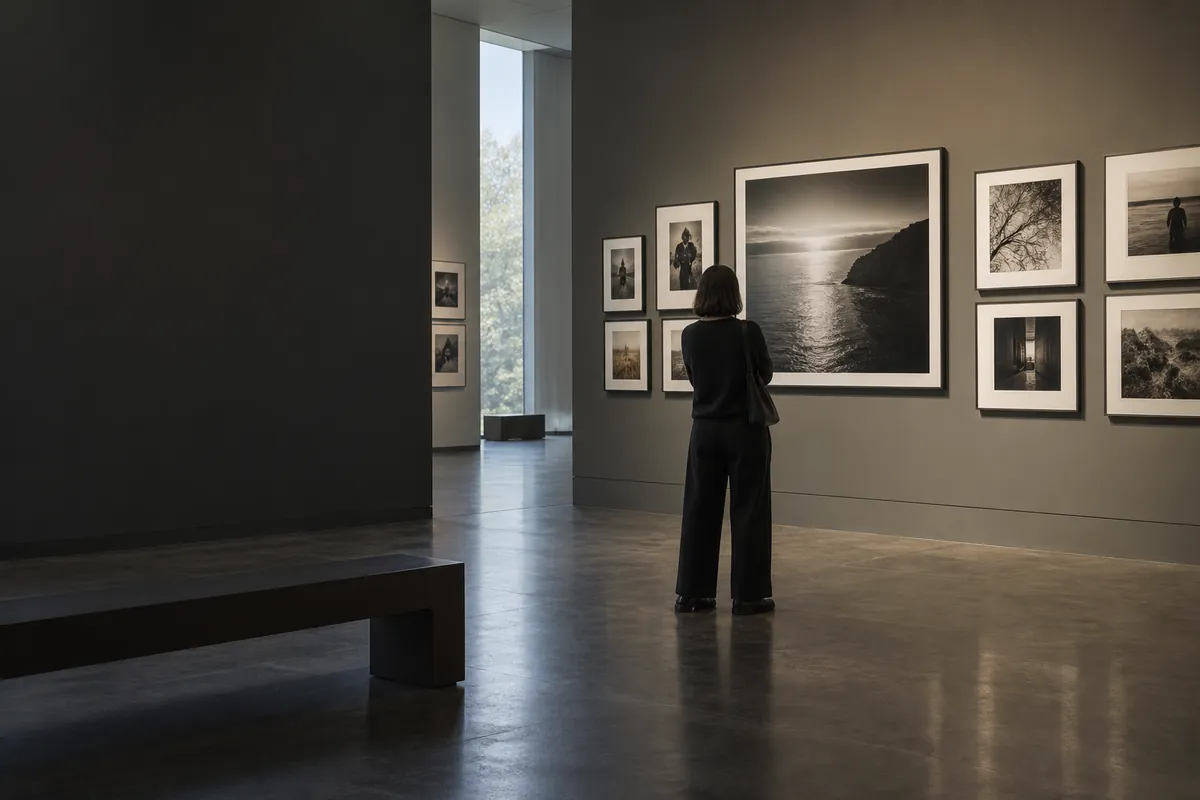
For a study, use suitable resolution and preserve proportions. Identify useful crops and keep a whole-object view nearby. Avoid colour changes that could support a mistaken interpretation of material. To show a real museum, use an identified photograph; a generated image serves only as illustration when clearly described as such.
Common questions
Is a downloadable image freely reusable?
Downloading is insufficient: consult the file’s and catalogue’s rights information.
Does an on-view filter indicate a licence?
No. Exhibition status and reuse conditions are separate information.
What should be retained after cropping?
Source, credit, rights notices and disclosure of the crop let readers recover the file and its context.
Method and references
Reading advice and exercises written for this guide. The references extend the documentary and technical explanations. Check visit conditions with each institution.
Continue reading
- Finding an artwork in a museum catalogue
- Photography: processes, prints and dates
- Reading an artwork label: artist, date, technique and attribution
- Explore : Movements that changed how we see.
- Explore : Photography: reading an image, from negative to museum.
- Explore : Digital art: from code to sensory experience.